
 EN
 English
 Vietnamese
 繁体中文
 Italian
 Spanish
 Thai
 Japanese
 Portuguese
 Korean
 Russian
 French
 German
 Arabic
Stay Updated with Allroad’s
Industry Knowledge
Industry Trends, Product Knowledge & Global Trade Insights

Industry Trends, Product Knowledge & Global Trade Insights
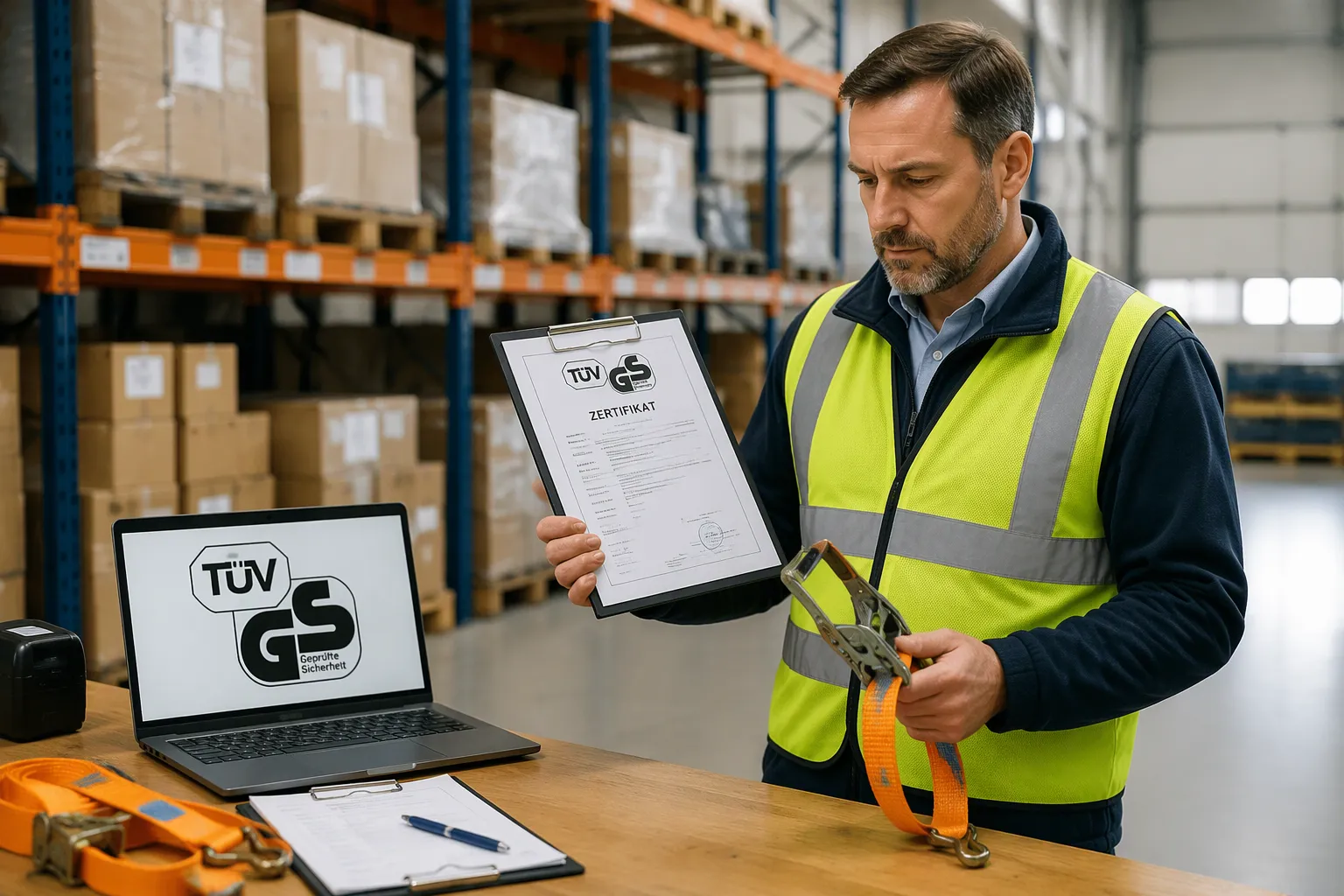
You check tie down strap supplier certifications in four steps. Ask for the full documents. Check the report numbers with the institute that issued them. Match each certificate to the exact product specs. Test the goods when they arrive.
A logo on a website proves nothing. A tag you can remove proves nothing either. The GS TÜV symbol should be on the product itself, because that permanent mark carries real weight.
This post covers which certifications matter for lashing straps. It also walks you through a four-step process to verify tie down strap supplier certifications. Follow it, and you protect the safety of every load your customers secure.
Always ask for the complete certificate document, not just a logo or screenshot.
Call the institute that issued the certificate directly to confirm the certificate number is real and active.
Check that the certificate matches your exact product by looking at the model numbers and load ratings.
Check samples from the delivered goods to make sure they match the certified values.
Make certification checks a normal step for every order. This helps you avoid risks and protect your money.
The GS mark stands for "Tested Safety." A recognized testing company issues it under the German Product Safety Act. TÜV and BG are the bodies you will see most often on lashing strap paperwork. The mark tells you an independent lab examined the product and found it safe for its intended use.
A supplier may hold several credentials at once. You might see GS, CE, and TÜV/GS listed side by side. Each one covers a different legal or market purpose. Ask the supplier which credential applies to the exact strap you plan to order. A gs-certified strap line does not make every product in the catalog certified.
GS certification for web lashings is tested against EN 12195-2. This standard sets the rules for load restraint on road vehicles. It defines strength, marking, and testing methods. A proper en 12195-2 test report shows the strap passed those checks.
Every compliant strap carries a blue identification label. The label shows the lashing capacity (LC) in daN, the standard tension force, and details about the webbing. These figures must match the certificate. The label is your fastest field check for product safety for lashing assemblies.
Buyers should confirm that tie-downs comply with the high en 12195-2 standard requirements before signing a contract. Ask for the en 12195-2 standard requirements in writing. A supplier who knows the en 12195-2 standard well will answer without delay. That confidence is a good sign of genuine gs certificates.
Start by asking in writing. Ask the supplier to send the full certificate pdf for the strap model you plan to buy. A logo image, a screenshot, or a photo of a framed certificate is not enough. Those files are easy to copy, edit, or borrow from another factory. The original document has the details you need to check.
A complete certificate shows five things. Read each one and check it against your order.
Certificate number. This is the unique reference the issuing institute gave. You will use it in Step 2 to cross-check the record.
Issuing institute. The document should name the testing body, such as TÜV Rheinland, TÜV SÜD, or another recognized lab. A generic "certified" stamp with no institute name tells you nothing.
Product description. The certificate should describe the strap in specific terms: model number, webbing material, width, and lashing capacity.
Standard referenced. Look for the standard the lab tested against. For lashing straps, that is en 12195-2. A certificate with no standard cited is not one you can rely on.
Validity dates. Note the issue date and the expiry date. An expired document proves the product passed a test years ago, not that it passes today.
Read the whole page, not just the header. The scope section often limits the certificate to one factory site or one product family. That limit matters when you place a large order.
Some warning signs appear on the paperwork itself. Others show up on the product. Watch for these:
Removable tags instead of permanent markings. A gs mark on a hangtag can travel from one product to another. The symbol should be molded, printed, or stitched onto the strap or its hardware.
Missing standard references. A document that never names en 12195-2 or another test standard gives you no way to judge what was tested.
A different product name. Check that the model on the certificate matches the model on your quotation. Suppliers sometimes send a certificate for a heavier, certified strap and ship a lighter, uncertified one.
No certificate number or a number that looks hand-typed. A real report number follows the institute's own format.
When you verify tie down strap supplier certifications, treat every gap as a question to ask. A supplier with genuine documents will answer each one with a copy of the record. A supplier with borrowed paperwork will stall, change the subject, or send another screenshot. Either response tells you what you need to know before you commit to an order.
A document can look perfect and still be useless. The next step is to confirm the record exists at the source. This step tells a real certificate apart from a clever copy, and it takes only a few emails.
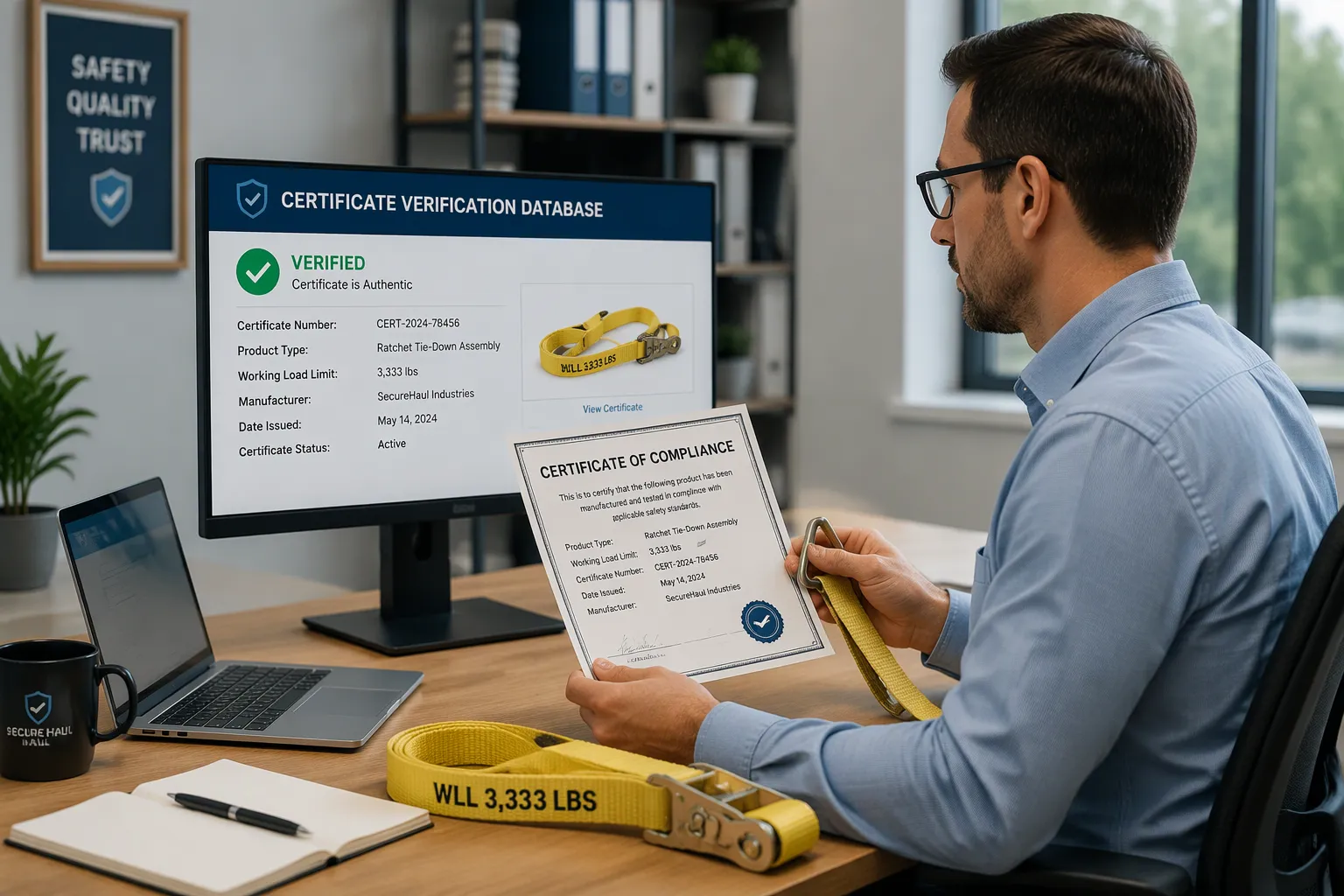
Contact the issuing institute directly. If the paperwork says the strap is gs-certified by tüv rheinland, use TÜV Rheinland's own verification channel. Most large institutes post a certificate database or a contact form for this exact purpose. Send the certificate number, the product name, and the factory name. Ask one clear question: does this record exist, and is it active?
You can check the report number with the lab in three moves:
Find the institute's official website and its certificate lookup page.
Type the certificate number exactly as it appears on the document.
Compare the result with the paper copy — product name, factory, and status.
A live record proves the document is real. A missing record, or one that names a different company, ends the conversation. Do not accept a scanned letter in place of the database entry.
Then ask how the certificate is kept up to date. Yearly audits check a supplier's testing steps and production processes. A factory that passes these audits keeps its certification active. A factory that skips them may hold an expired or suspended document. Ask when the last audit happened and request the audit summary. A supplier with nothing to hide will share it.
A real certificate still has limits. Read the scope section and compare it with your order. The document may cover one factory site, one product family, or one lashing capacity range. A strap outside that range is not covered, even if the brand name matches.
Check the validity dates against your delivery schedule. A certificate that expires before your shipment leaves the factory leaves you at risk. Ask the supplier to confirm the document will stay current through production and delivery. If renewal is pending, get the renewal timeline in writing.
Request the full certificate pdf for every model you plan to buy. Keep each file with your order records. When you verify a factory's certifications are real, you build a paper trail that protects you later. Valid certifications hold up under scrutiny at every stage — the database, the audit record, and the scope page. That is the standard to hold every supplier to.
A certificate only protects the product it names. Put the document next to your purchase order and compare the model number line by line. Check the webbing material, the strap width, and the hardware finish. Then look at the lashing capacity. The certificate lists a load figure in daN, and your order should state the same figure. If they don't match, the paperwork covers a different strap.
Sometimes suppliers hold a valid certificate for a heavy-duty model and quote you a lighter one at a lower price. The document looks impressive, but the shipped goods do not match it. Confirm that the certificate matches your exact product before you approve the sample. Ask the supplier to point to the model number on the certificate that matches your order. An honest factory will answer this in seconds.
The GS TÜV symbol should appear on the strap itself, not only on a hangtag. Look for a molded or printed mark on the ratchet handle, the hook, or the webbing. A removable tag can move from one batch to another, so treat it as a secondary clue. The permanent mark is the one that survives shipping, storage, and years of use.
Next, read the blue label. It should show the lashing capacity, the standard tension force, and the webbing details. Compare each figure with the certificate and with the en 12195-2 test report. When you check that ratchet strap suppliers match labels to certificates, you catch relabeled or mixed stock early. A tuv/gs certified strap line still needs this check on every shipment.
One certificate does not cover every size or variant. A 50 mm strap and a 35 mm strap are different products, even under the same brand. Ask for a separate document for each model you buy. Treat each exact product as its own case, and keep the matching certificate with your order file.
Paperwork covers the design, but delivered goods prove the production. Start by asking which activities the supplier completed. A component test examines the webbing, the ratchet, or the hook alone. A proof load test pulls each strap to a set force. A break test pulls a sample until it fails. A production inspection checks the batch on the line. Certification is the formal document that follows. These are separate steps, and a supplier may complete only some of them. Ask for the type test report that covers the exact product you ordered.
When the shipment arrives, pull samples at random. Check the permanent GS TÜV mark on the ratchet handle, the hook, and the webbing. Read the blue label and compare the lashing capacity, the standard tension force, and the webbing details with the certificate. Then test random production straps against certificate values. A strap that pulls short of its stated figure fails the check, no matter what the file says. Ask ratchet strap suppliers for batch test records before you release the container.
In-house checks catch most problems, but some orders justify an outside opinion. First orders with a new factory deserve independent testing. High-load applications, such as heavy machinery or commercial transport, carry more risk and warrant the cost. A third-party lab gives you third-party test reports you can show your own customers and insurers.
Choose a lab recognized in your target market, and send samples from the actual shipment. Ask the lab to test against en 12195-2 and to report each figure. Keep the report with your order file. When you check certifications and compliance this way, you close the loop from certificate to crate. Make these checks a standard step in supplier qualification, and every future order starts on solid ground.
Checking certifications comes down to four steps. Ask for the full documents. Check the report numbers with the institute that issued them. Match each certificate to the exact product. Test the delivered goods against the certificate values. Do these steps every time you check tie down strap supplier certifications, and fake paperwork has nowhere to hide.
This habit protects your money. A failed inspection, a recall, or a liability claim costs far more than the paperwork takes. Make certificate checks a normal part of supplier qualification. Ask for the file before you sign, and keep it with every order. Then each shipment starts with proof, not promises.
Think of a refusal as a failed check. A real factory keeps its papers on file and shares them right away. Ask one more time in writing and name the exact model. Silence or another screenshot ends the talk. Go to a supplier that answers with the record.
No. CE and GS do different jobs. CE shows the product meets EU legal rules. GS means an independent institute tested the product for safety under the German Product Safety Act. Ask which credential covers your exact strap, and request the document for each one you need.
Most checks finish within a few business days. The institute's database lookup is often instant. Audit summaries and scope confirmations may take longer. Start the process before you sign, not after. Build the timeline into your order schedule so a slow reply never delays production.
Raise the issue before you confirm the purchase order. Ask the supplier for the renewal timeline in writing. A pending renewal is fine only with a dated promise. If not, the shipment may arrive without valid coverage. Confirm the certificate stays current through production and delivery.
Not always. A certificate names a specific product, factory, and specification. A private-label version with different webbing, hardware, or lashing capacity is a different product. Ask the supplier to confirm the certificate covers your exact variant, and request a separate document when it does not.

Assess manufacturing capabilities of a Chinese OEM supplier by defining specs, auditing the factory, testing samples, checking finances, and running a trial order.
Find out more about our news >
Meet ALL ROAD at Automechanika Shanghai 2026, December 2–5, at Booth 2.2C43. Explore automotive emergency products, EV chargers and OEM/ODM solutions for global buyers.
Find out more about our news >
To manufacture private label tie down straps, screen factories for experience, certifications, and custom printing. Request samples, verify compliance, and lock terms.
Find out more about our news >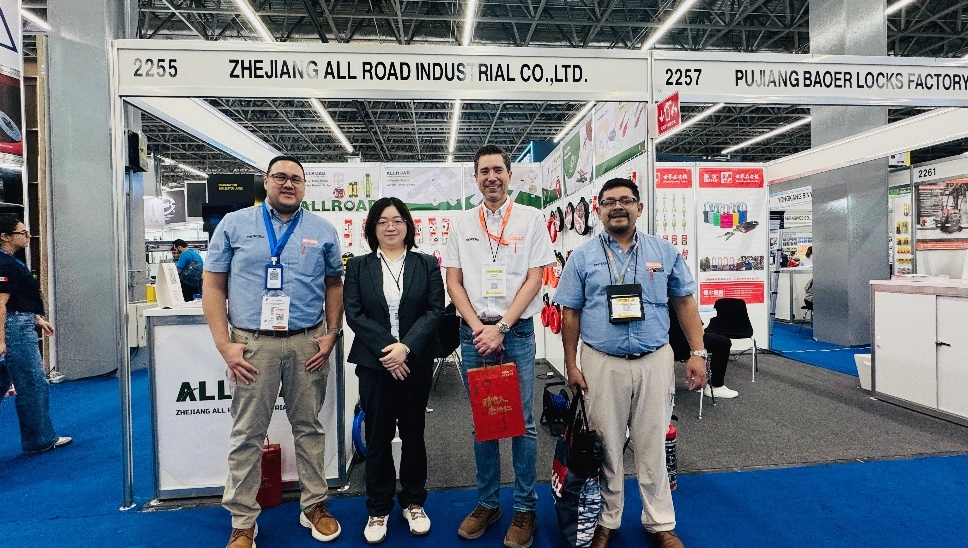
Zhejiang All Road Industrial Co.,Ltd. participated in the Mexico National Hardware Expo with its core products, using this opportunity to deepen its presence in the Latin American market and learn from cutting-edge industry practices.
Find out more about our news >
Learn how to vet Chinese manufacturers for ratchet tie down straps: verify credentials, request samples, and conduct inspections to secure a reliable wholesale partner.
Find out more about our news >
In November 2026, AAPEX 2026, one of the world's leading automotive aftermarket events, was held in Las Vegas, USA.
Find out more about our news >