
 EN
 English
 Vietnamese
 繁体中文
 Italian
 Spanish
 Thai
 Japanese
 Portuguese
 Korean
 Russian
 French
 German
 Arabic
Stay Updated with Allroad’s
Industry Knowledge
Industry Trends, Product Knowledge & Global Trade Insights


Industry Trends, Product Knowledge & Global Trade Insights
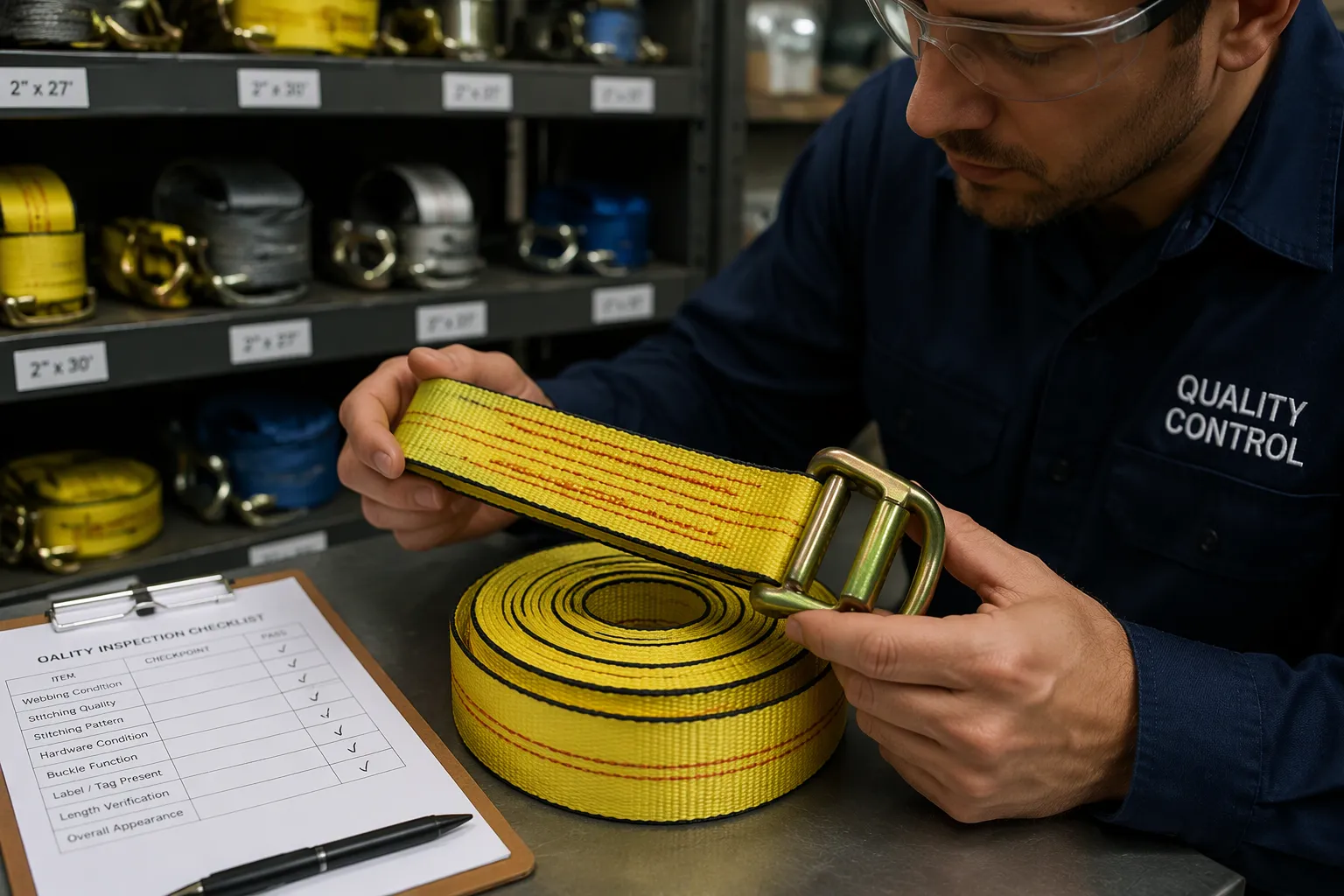
Your first shipment arrives in perfect condition. By the third or fourth reorder, the webbing feels thinner, the ratchet sticks, and the working load labels look different. That drift is the real problem you face when you source tie down straps.
The answer is a seven-point evaluation framework. Apply these checks: (1) verify QMS certifications, (2) evaluate material specs and sourcing, (3) assess process controls, (4) review testing and labeling, (5) check capacity fit, (6) examine order-to-order consistency measures, and (7) analyze costs.
Treat each tip as a practical check for equipment selection and vendor qualifications. You can apply them during supplier vetting and again at every reorder. They turn consistent product quality from a hope into a verifiable expectation.
Check the manufacturer's quality management system certificate to make sure production stays consistent.
Ask for full details about the materials, and keep a reference datasheet for each reorder.
Check process controls and testing records to spot quality drift early.
Check the capacity and change notification policies to protect quality during growth.
Look at the total costs, not just the unit price, so you can avoid hidden trade-offs in quality.
Begin with the quality management system certificate. ISO9001 is the basic one you should confirm. It covers how a manufacturer plans production, controls documents, inspects output, and fixes defects. Ask for the certificate itself, not just a logo on a website. Check the scope statement and the expiry date. A current certificate shows the management system is audited on a regular schedule.
Product-level marks sit on top of that base. CE, GS, TUV/GS, and RoHS cover specific product features like electrical safety, restricted substances, or regional market access. Treat these as additions to a QMS certificate, never as replacements. A factory can hold a product mark and still run a process with no written records. Collect the full set of manufacturer compliance certificates and read what each one really covers.
A certified QMS turns good practice into written procedure. Incoming webbing gets inspected against a set standard. Operators follow work instructions at each assembly station. Bad batches go through a written correction path. These steps cut down variation between orders, because the process no longer depends on who is on shift that day.
This is where manufacturer certification pays off at reorder time. You can point to a clause and ask for the record behind it. Request the certification documentation package during supplier vetting, then check it again when the certificate comes up for renewal. A manufacturer that keeps its paperwork current is much more likely to keep its product specs current too. That habit protects your quality standards across every shipment, not just the first one.
Begin with the webbing. High-tenacity polyester is the normal pick for a good strap. It resists stretch under load and stands up to weather and abrasion. Ask the manufacturer to name the grade and yarn type in writing. Also confirm the webbing width options. Many suppliers offer custom widths up to 4 inches, and each width works with a specific hardware range.
Hardware needs the same close look. Check the ratchet specs: handle material, gear tooth count, spring type, and finish. A ratchet that works smoothly on the sample but sticks on the reorder often means the hardware source changed. Match the hook style and strap end fitting to your application. Good construction shows in these small details, and they are the first things to slip when sourcing is loose.
A manufacturer that controls every step from webbing to finished ratchet strap keeps specs steady much more easily. In-house weaving, dyeing, and assembly mean one set of process settings controls the whole product. Outsourced parts add new variables at every handoff. Vertical control does not promise perfection, but it removes the most common cause of order-to-order variation.
Ask for product specification datasheets before you place the first order. The datasheet should list the webbing grade, width, hardware specs, and working load limit. Keep it as your reference standard. At each reorder, confirm the same material grade is used and compare the new shipment against that sheet. This simple habit supports reliable performance across the full life of your supply relationship. Reliable performance starts with documented specs, and manufacturing discipline keeps them stable.
Ask the manufacturer to show you the production line, step by step. You want to see written work instructions at each station. You want to see inspection points where operators measure webbing width, check stitch density, and test ratchet function. These checkpoints turn quality control from a final inspection into a continuous habit.
Pay attention to how the factory handles a nonconforming batch. A strong system tags the batch, records the defect, and traces the cause back to a specific machine or material lot. This manufacturing process oversight keeps small problems from repeating across future orders. Ask how the factory documents corrective actions. A clear paper trail shows you that consistent product quality rests on process, not luck.
Automation supports repeatable output when the factory sets it up with care. Automated cutting and stitching machines hold the same settings run after run. That consistency matters most at reorder time, when your fourth shipment should match your first. Ask which steps run on automated equipment and how operators verify settings at the start of each shift.
Automation alone does not guarantee results. You still need trained operators and routine calibration against manufacturing standards. Ask for the calibration schedule and the maintenance log for key machines. A factory that treats its equipment records as part of quality control requirements will hold reliable performance across orders. Combine that discipline with clear manufacturing standards, and you get a process you can audit at every reorder. Reliable performance then becomes a documented outcome, not a promise.
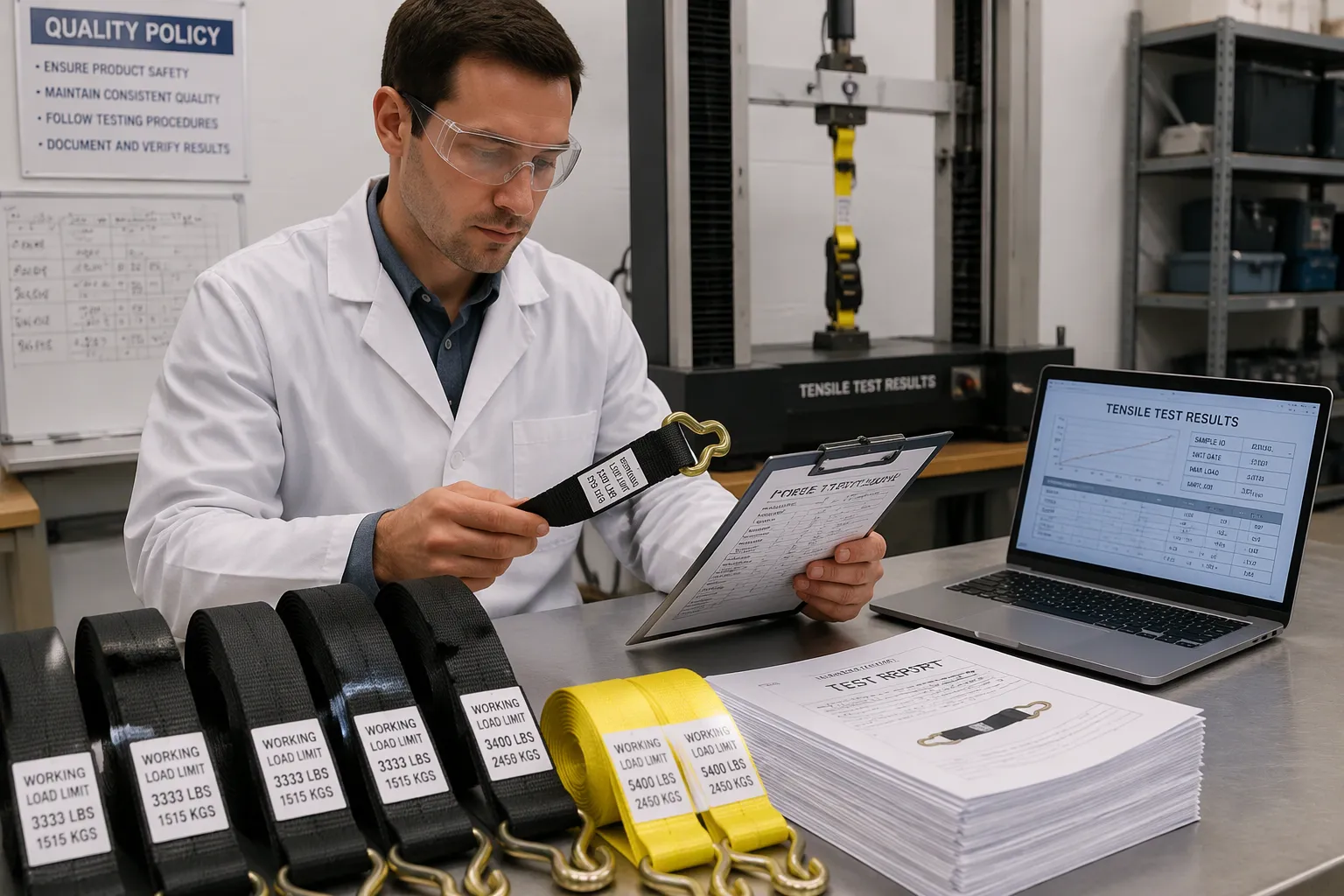
Start by asking the manufacturer for its in-house lab test results. A factory with its own lab can take webbing samples and pull-test them until they break on a regular schedule. These tests show whether strength stays steady from batch to batch. Next, ask for third-party test reports from an outside lab. An independent report takes away any doubt about how the factory measured performance.
Look at both sets of documents together. Compare the reported breaking strength with the working load limit printed on the strap. Make sure the test date falls close to your production window. A manufacturer that keeps current test files on hand shows reliable performance is a habit, not just a claim.
Check the label on every order. Each strap should show the working load limit, breaking strength, webbing material, and manufacturer identification. Clear labels let you confirm working load limits at receiving without opening a test report. Missing or faded labels are a sign that the labeling process has slipped.
Lot traceability links a shipment back to its production records. Ask the manufacturer to connect each lot number to its webbing batch, test report, and assembly date. That record lets you check consistency from one shipment to the next.
Treat dot-approved securement equipment as a labeling and rating expectation to confirm with your supplier. Ask how they document working load limits and securement equipment compliance, and request dot compliance documentation for each order. Confirm dot compliance documentation covers the ratings you need. Review dot compliance records at every reorder, and keep your own file of dot-approved ratchet straps, dot-approved securement equipment, and dot-approved ratchet straps for comparison. Store samples of dot-approved ratchet straps next to the paperwork. A supplier who answers these questions clearly gives you confidence in dot compliance, and that confidence supports reliable performance across every shipment of dot-approved ratchet straps you receive.
A factory that runs close to its limit will rush your order. Ask the manufacturer how much it can make each month and how much of that your order will use. A supplier with extra room can keep its normal inspection pace. A supplier stretched too thin often skips steps to meet dates.
Equipment selection matters here as much as volume. Ask which machines will make your straps and how many lines run at once. A plant with lines just for webbing and assembly keeps your order on a steady schedule. Confirm the lead time in writing, and compare it with the capacity number. A short lead time paired with a full order book is a warning sign.
Your supplier may grow during your relationship. New customers, new lines, and new shifts all change the production picture. Ask how the factory protects quality when volume goes up. A strong answer names added inspection points, extra shifts with trained operators, and a plan for equipment selection that keeps up with demand.
Revisit your equipment selection checks at each reorder. Confirm the same machines still run your straps and the same inspection steps still apply. Ask whether any line has been added or moved since your last order. Growth itself is not a problem. Growth that is not managed is. A manufacturer that plans its capacity and its equipment selection together will keep your fourth shipment as steady as your first.
Ask the manufacturer for a written policy on change notification. A reliable supplier tells you before it changes a material, a component, or a process. You want notice in advance, not a surprise in the box. Ask who sends the notice and how much lead time you get. A clear policy protects consistent product quality across every reorder.
Specification locking works alongside that policy. Lock the approved webbing grade, hardware part numbers, and label layout into your purchase agreement. The supplier then treats those items as fixed. Any change requires your written approval first. This step removes the guesswork from reorders and supports the reliability you expect from a long-term partner.
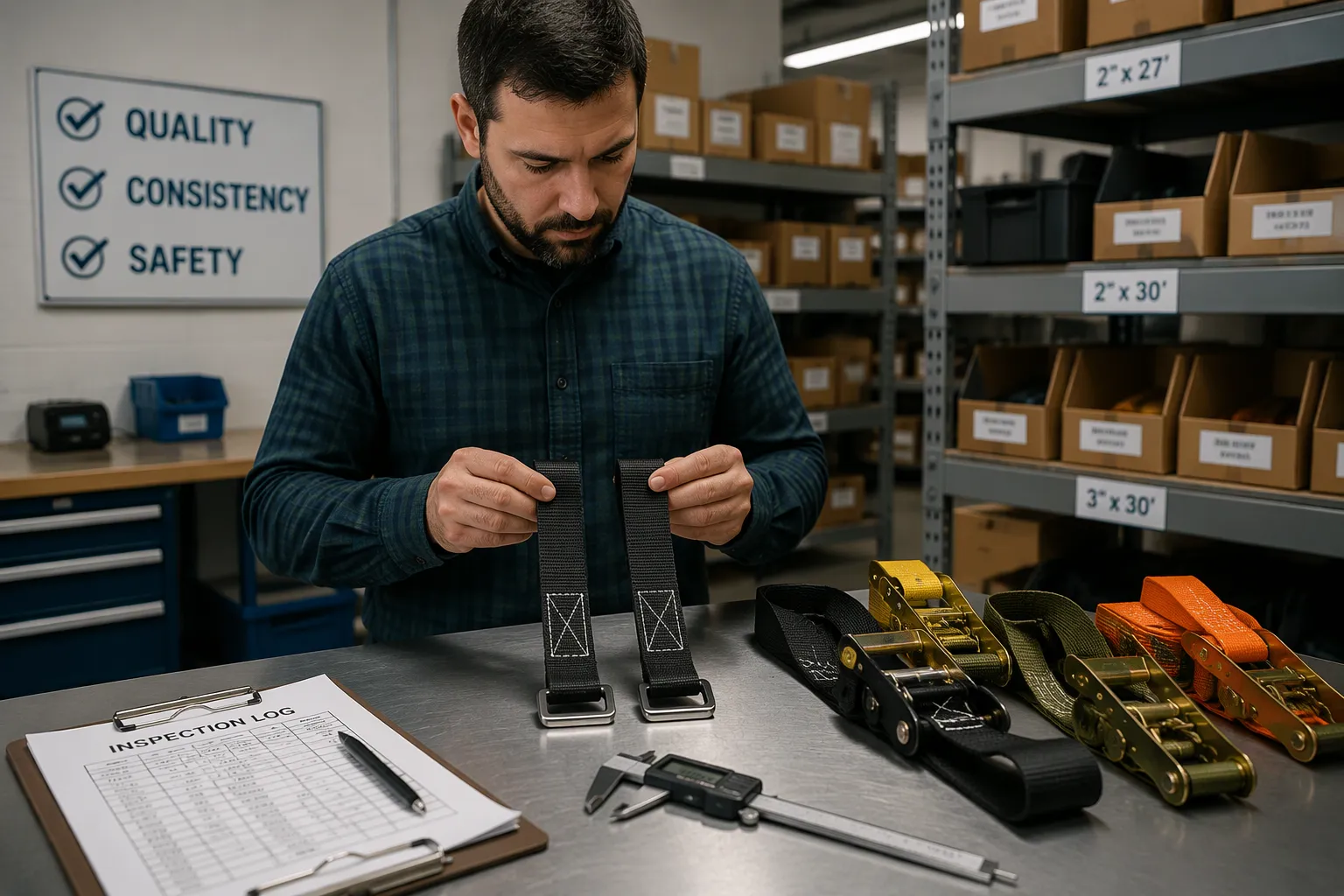
Keep a signed sample from the first approved order. Ask the manufacturer to keep a matching sample too. At each reorder, compare the new shipment against that original. Check the webbing color, width, and stitch pattern side by side. A saved sample turns a vague feeling into a measurable comparison.
Use simple inspection rules when the shipment arrives. Look for cuts, fraying, holes, or abrasion on the webbing. Confirm the ratchet mechanism closes and locks properly. Test a few units by hand before you release the lot. These checks take minutes and catch drift early.
Write down what you find in a short log. Note the lot number, the date, and any defect. Share the log with your supplier. This habit strengthens quality control on both sides. It also gives you evidence when you discuss manufacturing improvements. Over time, the log shows whether consistent product quality holds. That record builds reliability into your supply chain, one shipment at a time.
A low unit price often hides a weaker spec. Read each quote line by line and match it to your datasheet. Check the webbing grade, the ratchet hardware, and the label detail against what you approved. A quote that leaves these items vague gives the supplier room to substitute later.
Compare quotes on total cost, not sticker price. Factor in inspection time, replacement rates, and the labor cost of returns. A slightly higher price with locked specs usually beats a bargain that drifts. This is the heart of equipment procurement best practices: you pay for the process, not just the product.
A price that stays the same across reorders shows a steady cost base. Ask the supplier how they set prices and what causes a change. Sudden discounts deserve a question, because they often come from a cheaper material source. Sustainable pricing supports the same spec order after order.
Build your buying around a systematic procurement process. Set written specs, approve samples, and review costs at each reorder. Strong systematic procurement procedures keep price talks separate from spec changes. Documented systematic procurement procedures also give you leverage when a quote looks off. A disciplined systematic procurement approach turns cost review into a routine check. That routine protects quality and keeps your supply chain predictable.
You now have a full checklist: verify QMS certifications, evaluate material specs and sourcing, assess process controls, review testing and labeling, check capacity fit, examine order-to-order consistency measures, and analyze costs. Run all seven checks before you approve a supplier.
Consistent quality across repeat orders comes from systems and processes, not from judging a single sample. Certifications, materials, controls, testing, capacity, consistency measures, and cost structure all shape what arrives in your fourth shipment. Apply the seven checks during supplier vetting, then revisit them at every reorder. That habit keeps your quality steady.
Check the certificate each time it comes up for renewal. Make sure the scope still covers your product. Ask for the current audit record every time. A certificate that has lapsed or narrowed shows a process that may drift between orders.
Ask for the QMS certificate, product specification datasheets, in-house lab results, and third-party test reports. Add the change notification policy and a signed sample. These documents give you a baseline for every future reorder.
No. Product marks cover specific features such as safety or restricted substances. They add to a QMS certificate but never replace it. Confirm both, and read what each one actually covers.
Compare the new shipment against your kept approved sample. Check webbing width, color, and stitch pattern. Look for cuts, fraying, holes, or abrasion. Confirm the ratchet closes and locks. Log the lot number and any defect, then share the log with your supplier.
Not always, but a vague quote leaves room for substitution. Match each line to your approved datasheet. Compare total cost, including inspection time and returns. A steady price with locked specs usually beats a bargain that drifts.

To find a reputable luggage strap manufacturer in China, research hubs, vet credentials, test samples, and negotiate clear terms to protect your brand.
Find out more about our news >
Spot a reliable established Chinese hardware manufacturer: check export history, verified certifications, quality control, and after-sales support to avoid costly risks.
Find out more about our news >
Identify a reliable factory that manufactures tow ropes and cargo straps by defining specs, using targeted channels, auditing suppliers, comparing quotes, and trial orders.
Find out more about our news >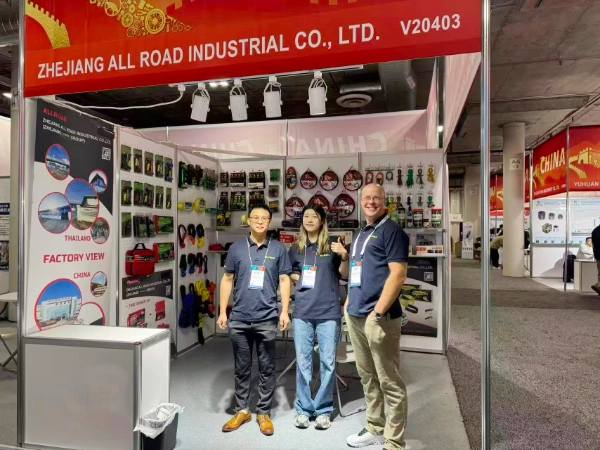
In November 2026, AAPEX 2026, one of the world's leading automotive aftermarket events, was held in Las Vegas, USA.
Find out more about our news >
In the face of natural disasters, housing crises, or the need for rapid public infrastructure, the ability to deploy high-quality safe, and durable shelters is paramount. For Government Procurement Officers and NGOs.
Find out more about our news >
Assess manufacturing capabilities of a Chinese OEM supplier by defining specs, auditing the factory, testing samples, checking finances, and running a trial order.
Find out more about our news >