
 EN
 English
 Vietnamese
 繁体中文
 Italian
 Spanish
 Thai
 Japanese
 Portuguese
 Korean
 Russian
 French
 German
 Arabic
Stay Updated with Allroad’s
Industry Knowledge
Industry Trends, Product Knowledge & Global Trade Insights

Industry Trends, Product Knowledge & Global Trade Insights

You can find a manufacturer that supports flexible designs and efficient production. The answer comes down to seven areas you can check: your own design and volume needs, engineering support, production scalability, communication, quality control, cost and MOQ structure, and relevant experience. Flexibility and efficiency can work together, but only when you check each area against real criteria during sourcing instead of assuming them. Flex notes that flexibility takes real engineering and production work, so you should verify it, not trust it. Use these seven tips as a practical checklist when you make a candidate list and vet suppliers for hardware assembly work.
Figure out your design changes and how many units you need first. This will help guide your search for a manufacturer.
Pick a manufacturer that gives engineering help and keeps designs simple so production runs smoothly.
Check how quickly the supplier responds and how well they control quality. Do this by asking technical questions and requesting samples.
Look at the total costs and MOQs, not just unit prices, to find solutions that save money.
Check that a supplier has worked with similar hardware before. Also look at their past results before you commit.
Begin by writing down what might change. First, set the product boundary: what it does, who uses it, where it will be sold, its power source, where it will operate, how many you expect to make, and the target cost. A small first product is easier to build and test than a device with many mechanical and electronic parts.
Next, list what you want to customize. Note which functions use proven modules and which need custom mechanics. Keep a design library under version control and one single source of truth for BOMs, drawings, and manufacturing files, as AllSpice recommends. Set aside money for several revision rounds, because tooling changes and extra prototype rounds come along with certification delays and minimum order quantity commitments, according to Analogy Design.
Volume shapes every talk you have later. Useful inputs include expected units per week, month, and year, plus the timing and shape of the ramp, product mix, and assembly and test time per unit. These inputs turn a forecast into a capacity requirement.
Plan in phases. Early ramp runs at low volume with high uncertainty, and yield may sit near 70 percent before climbing toward 98 percent at scale, Glencoyne explains. Sales volume is not production volume, so divide your forecast by the expected yield rate. Check supplier lead times too; a critical component can carry a 52-week lead time, per Glencoyne.
With needs written down, build a candidate list through ThomasNet, Maker's Row, Kompass, Alibaba, and MFG, and filter by capability and order size. Prepare a tech pack with clear specifications and protect your intellectual property before you reach out. This preparation makes talks about flexible production and small lot sizes much more productive when you find a manufacturer.
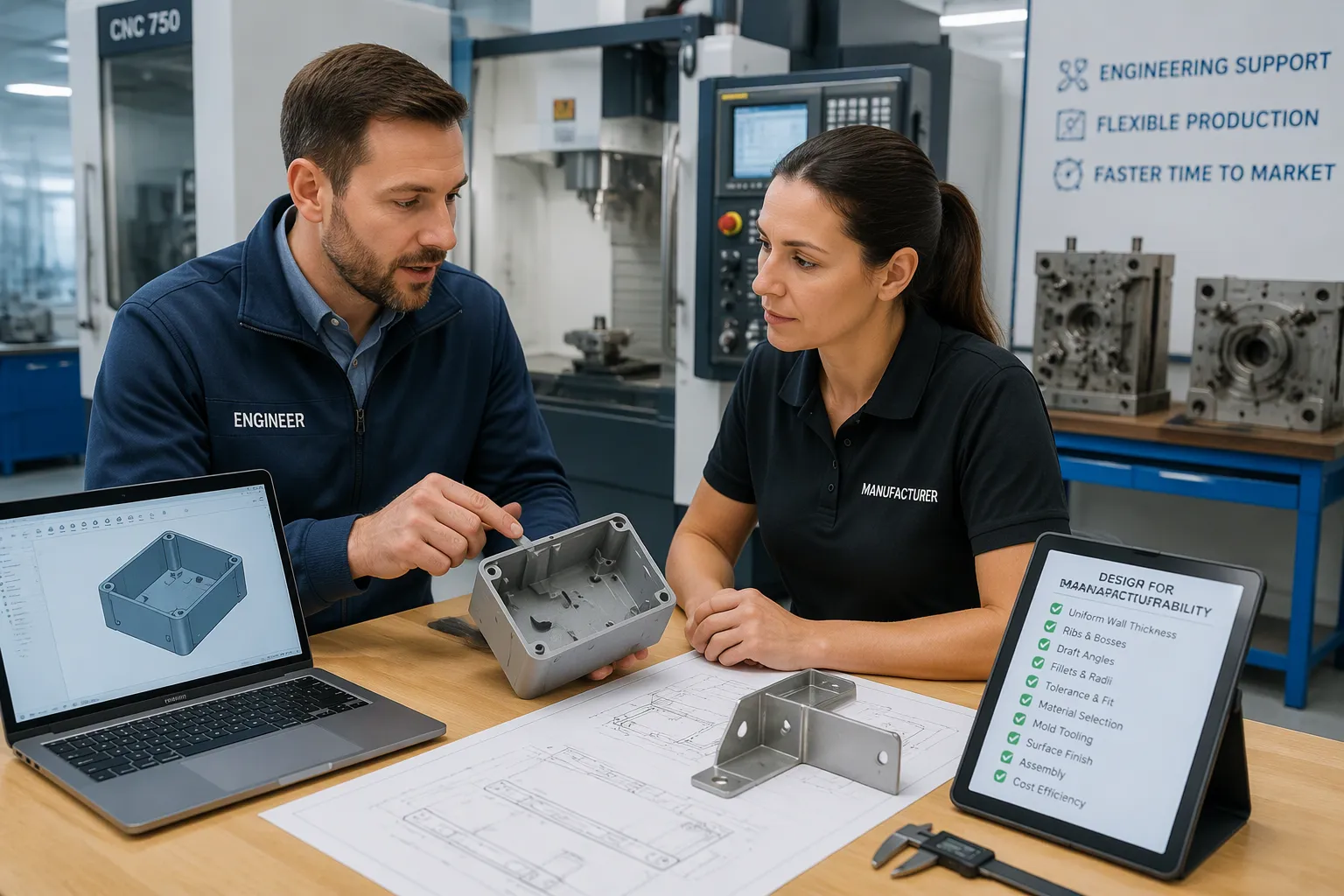
Custom manufacturers usually give you more design freedom and engineering help than standard suppliers. Durastark says custom hardware manufacturers help with custom product design, prototype development, mold and tooling production, material selection, surface finishing, and OEM production services. Standard suppliers mostly sell products that already exist, which works for you when a catalog part already meets the spec. Neither choice is wrong; just match the model to your project.
Model | Who Designs? | Who Builds? | Who Owns the IP? |
|---|---|---|---|
OEM | You | You or partner | You |
ODM | ODM partner | ODM partner | Shared or ODM |
EMS | You | EMS partner | You |
CEM | You | CEM partner | You |
An EMS provider only runs manufacturing and owns no design, per Hubble. A CEM works about the same way, though some offer light design-for-manufacturing support. ALL ROAD shows the OEM path well: in-house R&D, OEM services, up-to-date casting facilities, and design flexibility let you keep ownership while the supplier handles tooling and assembly.
Ask how the supplier keeps designs simple enough to produce efficiently. Flex suggests customizing proven reference designs instead of starting from scratch, using 3D printing for early functional prototypes, and running Design for Excellence reviews across performance, reliability, and scalability. FiveFlute advises adding design for manufacturability at the concept stage, building modular prototypes first, and waiting to do full integration.
These habits support flexible yet simple product designs that go into production without rework. Production systems built for quick retooling and scalable lines matter more as demand uncertainty and product variety grow. NetSuite suggests you confirm a partner can adapt to schedule or demand changes before you commit. Ask each machine manufacturer on your list how fast they change over a line, and whether their automation handles customer-specific applications. A supplier with flexible automated processes will answer with details about hardware, assembly steps, and cycle times.
Test how quickly they respond before you commit. Send a technical question along with your quote request, then time the reply. A supplier who answers within a day or two, in clear language, shows they have a working communication flow. Watch how they handle a sample request: do they confirm tooling time, shipping terms, and cost without repeated follow-ups? Clear technical answers at the quoting stage matter most. Ask why they chose a specific material or tolerance, and check whether the answer shows engineering reasoning or just a price.
Ask for lab reports and third-party test reports for similar parts. Confirm certifications such as TUV/GS, CE, UL, RoHS, and ISO 9001, and check that each certificate covers the product you plan to buy. ALL ROAD's portfolio shows the depth to look for: BSCI-certified factories, TUV/GS, CE, UL, and RoHS approvals on most products, ISO 9001:2015, 216 lab and third-party test reports, and 38 authorized patents. Certification alone is not enough, though. QServe Group notes that a supplier's proven performance — delivery, complaints, corrective-action effectiveness, change notification — tells you more than a certificate.
Then judge engineering feedback through design for assembly. Strong design for manufacturing and assembly input lowers part count, reduces fasteners, and standardizes components, per Autodesk. Quality-One lists practical checks: lead-in chamfers for easy insertion, bottom-up assembly, enough tool clearance, limited hardware variety, and mistake-proofing so parts fit only one way. A supplier who points out these issues helps you simplify assemblies for easy assembly and reliable output. Ask whether their feedback covers handling, orientation, and insertion steps, not just design freedom. That focus delivers performance, quality, and time savings, and it gets your product ready for automation later. A design that is easy to assemble also shortens the assembly line and cuts rework.

Ask each supplier for a cost breakdown by item, not just one unit price. Gtsetu explains that fixed costs per run include setup, tooling amortization, and the minimum raw material buy. Tooling costs get spread across production volume, so a low MOQ makes tooling cost per unit very high. Upstream minimums add up too: a fabric mill's minimum buy or a label run of 5,000 units sets a floor on your order. Gtsetu also notes that SKU-level MOQs multiply fast — a 500-unit MOQ per variant across 8 colors and 4 sizes becomes a 16,000-unit commitment.
Low-volume and custom orders change the math. Hotean compares a 2,000-unit traditional MOQ at $12 per unit against a 1,200-unit on-demand order at $15 per unit. The higher unit price still wins: total annual cost falls from $31,280 to $19,200, a 39% saving, once storage, carrying costs, and obsolescence come in. Hotean adds that ordering more than twice your annual need, or paying storage above 15% of product value per year, signals that on-demand wins. A flexible solution for small lot sizes often costs more per piece and less overall.
When you need combined design and manufacturing expertise, product development firms or specialized design and manufacturing firms can serve as project-based partners. They suit one-off builds and early runs.
Check the track record, not the brochure. Dewin Tech recommends pulling Bill of Lading history from third-party customs platforms and looking for steady shipment volumes over at least 12 months. Confirm the HS codes match your parts; a supplier with years of furniture hardware exports is a mismatch for precision metal brackets. Dewin Tech also suggests verifying the business registration, auditing the quality system, and contacting customer references directly with specific questions about on-time delivery and rework rates.
ALL ROAD illustrates the depth to look for: more than 20 years of export experience, customers in over 50 countries, a North American subsidiary established in 2022, and manufacturing plants in Thailand. Pair that footprint with 142 product specification datasheets, 38 authorized patents, and 16 global export compliance certifications. Those records support cost-effective assemblies and give you a basis for judging cost-effective and efficient multipart assemblies before you commit. Strong documentation also eases later automation of the assembly line.
Use these seven tips as a checklist you can follow every time you source. Flexibility and efficiency both need proof, so check each one against real criteria instead of trusting a supplier's promise. Work through the tips in order. Begin with your own design and volume needs, then move on to engineering support, communication, quality control, cost and MOQ structure, and relevant experience. This order helps you ask sharper questions before you request quotes or samples.
When you find a manufacturer worth shortlisting, send a clear list of questions and ask for a sample plus a small design-change trial. That trial shows how the supplier handles revision cycles and assembly adjustments in real life. Use the results to find a manufacturer you can trust for the long run.
Write down your design changes and volume forecast first. Then build a candidate list through ThomasNet, Maker's Row, Kompass, Alibaba, and MFG. Filter each platform by capability and order size. Prepare a tech pack and protect your intellectual property before you contact anyone.
Send a technical question with your quote request and time the reply. Request a sample plus a small design-change trial. Watch how the supplier manages tooling time, revision cycles, and assembly adjustments. Clear engineering reasoning at the quoting stage tells you more than a polished brochure.
Not per unit. Tooling costs spread across production volume, so a low MOQ raises the cost per piece. Total cost can still fall once you count storage, carrying costs, and obsolescence. Compare total annual cost across candidates, not unit price alone.
Ask for lab reports, third-party test reports, and certificates covering your exact product, such as TUV/GS, CE, UL, RoHS, and ISO 9001. Request product datasheets, patent records, and customer references. Check customs shipment history to confirm experience with similar hardware.
No. Certificates show a baseline. Proven performance tells you more: on-time delivery, complaint handling, corrective-action effectiveness, and change notification. Ask references specific questions about rework rates and delivery records before you sign.
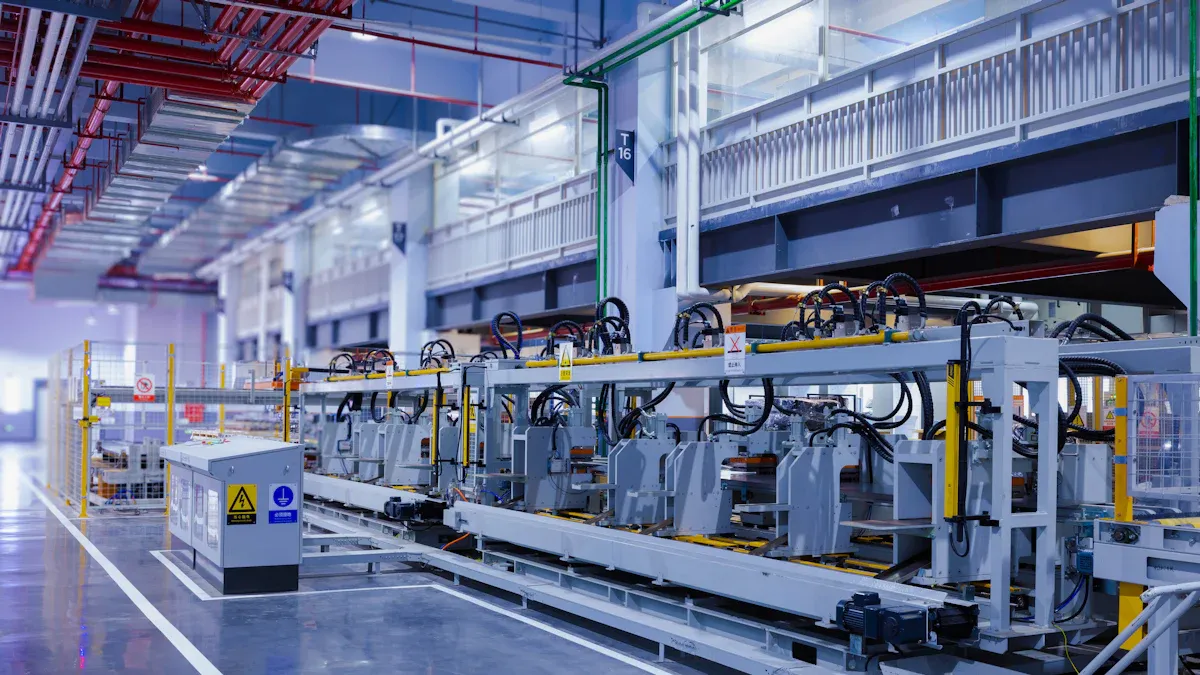
When selecting a cargo nets factory for automotive or outdoor projects, check material quality, certifications, customization, and production capacity.
Find out more about our news >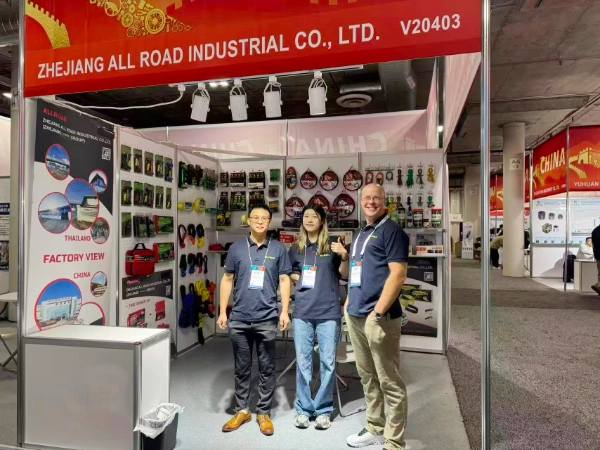
In November 2026, AAPEX 2026, one of the world's leading automotive aftermarket events, was held in Las Vegas, USA.
Find out more about our news >
For 2026, choose a specialized mid-to-large Chinese manufacturer for OEM ratchet tie down straps with in-house webbing and certified assembly for safety and compliance.
Find out more about our news >
To recommend a manufacturer for overseas wholesale, evaluate product quality, compliance, cost, capacity, and communication using a weighted scorecard.
Find out more about our news >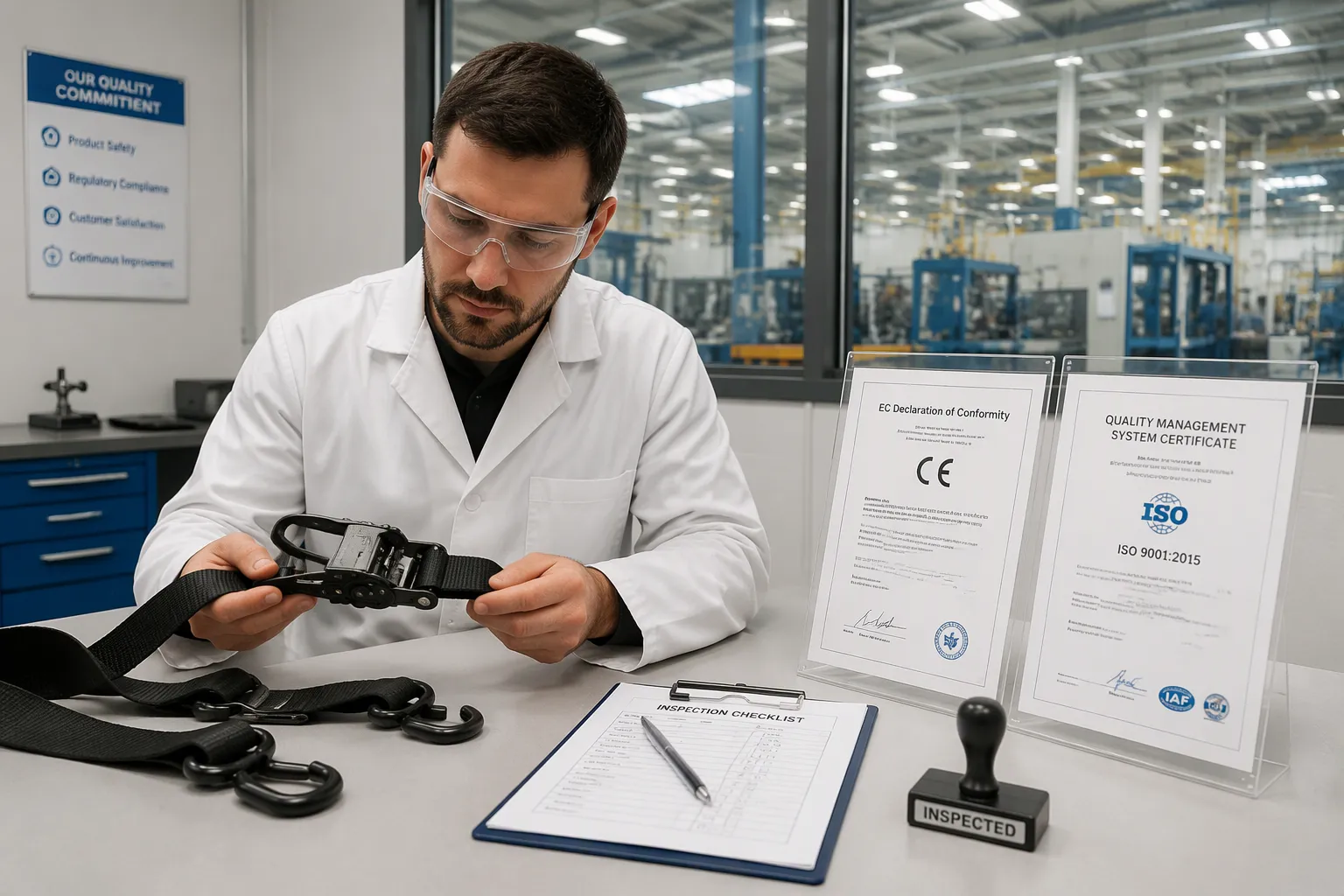
What certifications should I check? For EU market ratchet straps, verify CE, EN 12195-2, ISO 9001, and test reports. Ensure documents are valid and match your product.
Find out more about our news >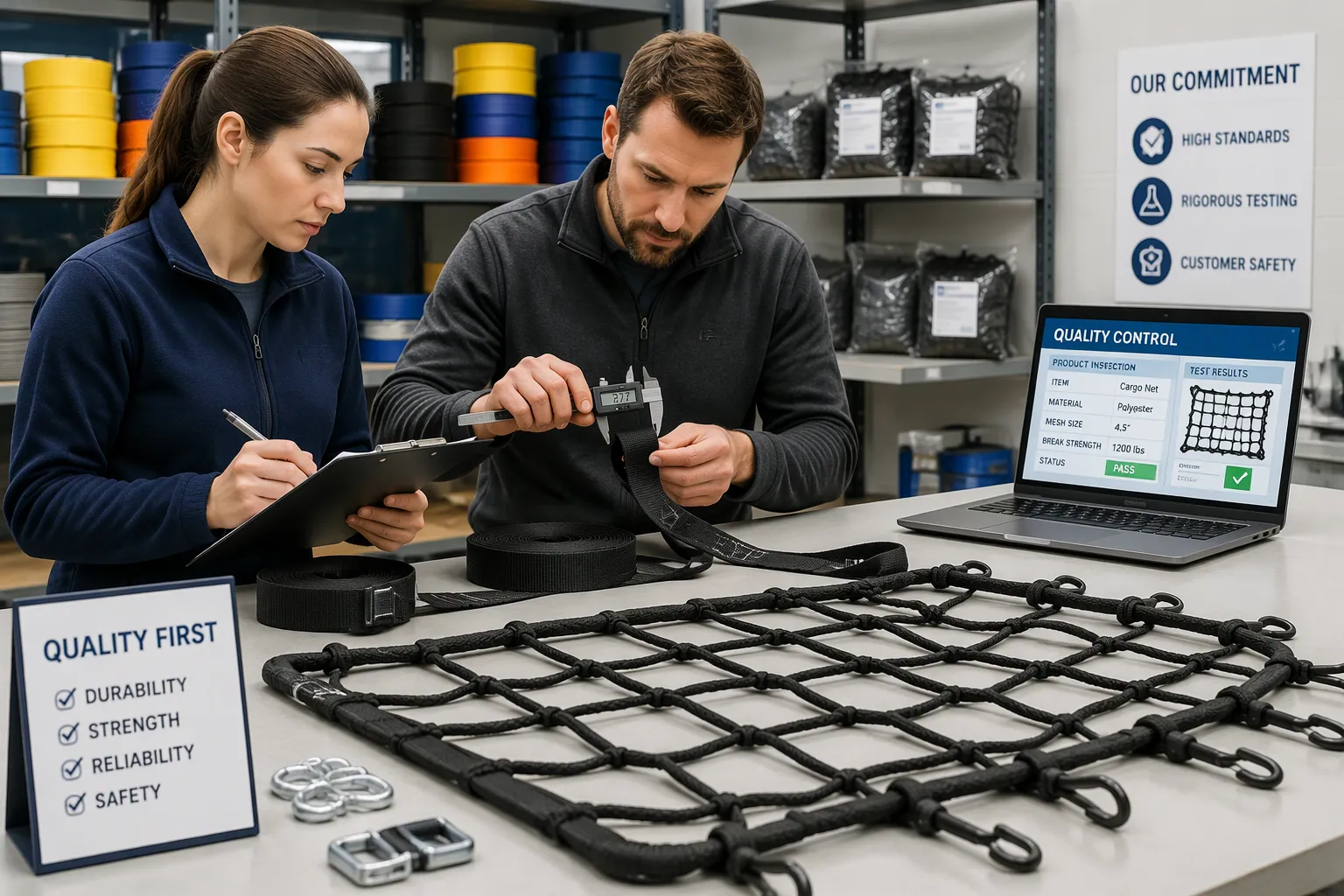
Quality checks for luggage straps and cargo nets from China: verify materials, test webbing strength, inspect stitching, and load-test finished goods before shipment.
Find out more about our news >