
 EN
 English
 Vietnamese
 繁体中文
 Italian
 Spanish
 Thai
 Japanese
 Portuguese
 Korean
 Russian
 French
 German
 Arabic
Stay Updated with Allroad’s
Industry Knowledge
Industry Trends, Product Knowledge & Global Trade Insights

Industry Trends, Product Knowledge & Global Trade Insights

To recommend a factory for customized hardware tools, score each candidate on six criteria: in-house design team, design for manufacturability integration, prototyping and testing, customization and tooling capability, regulatory compliance, and total cost of ownership.
In-house design changes the evaluation. Design and production decisions sit under one roof. This setup affects speed, accountability, and how fixes get made. A design flaw becomes a production talk, not a handoff between companies.
You need a process you can check and compare. This guide gives you one. You will learn to shortlist factories, check their claims, and defend your final recommendation to stakeholders with evidence, not guesses.
Make sure the factory has a real design team working inside it. Ask for proof, like CAD files and design review records.
Ask for a written design for manufacturability (DFM) review of your drawing. A good factory gives clear suggestions to make your design better.
Try the factory with a small test order of 5–20 units. This shows you how well they really communicate and control quality.
Check that the factory has current compliance certificates for your product. Make sure the papers match exactly what you are buying.
Compare quotes that cover the same scope. A higher unit price can be better if it includes full documentation and quality control.
You cannot recommend a factory based on a brochure claim alone. You need proof that the design team is real, that it works in the same building as production, and that it can act on your drawing. This section shows you what to ask for and how to read the answer.
Start with the people. Ask if the designers are employees or outside contractors. A true in-house team is on the payroll and reports to the same managers as the production line. Ask for CAD files and design review records from a recent project. Look for dated reviews, named reviewers, and change logs. Then send your own drawing and ask for a written design for manufacturability review. A strong team sends back comments on wall thickness, draft angles, and tolerance stack-up within days.
Use a factory with good records as your benchmark. ALL ROAD, founded in 2004, has in-house R&D and holds 38 authorized patents, 142 product specification datasheets, and 216 lab and third-party test reports. Treat that paper trail as the standard for proof you can check, not as the only valid option. Any candidate you recommend a factory for should match that level of documentation.
Design for manufacturability integration is what separates a real partner from a build to print manufacturing partner. The first group shapes the design around the process. The second group only runs your files. Ask for a DFM review of your drawing and watch how the team responds. Strong manufacturing engineering expertise shows up as specific proposals, not general praise.
The payoff can be measured. Part consolidation can cut part count by 30–50% with no loss of function. Matching tolerances to process capability can lower quality control and rework costs by 15–25%. Using DFM early can cut time-to-market by 25% and lower total manufacturing cost by 20–40%. A hand-assembled prototype that scales to 10,000 units may otherwise need $100,000–500,000 in new tooling plus months of validation.
Confirm the tooling and capabilities behind those promises. Ask about in-house tooling for handles, heads, and assembly components. Check die design and press facilities, CNC machining and PCBA for early builds, and testing and inspection fixtures. A factory with these manufacturing processes under one roof gives you an engineering-first approach and faster fixes. That mix of in-house manufacturing capabilities and engineering support is what you score.
A factory you can trust takes your hardware product from CAD to pilot tooling before mass production. The path begins with CAD-based design, then moves to rapid prototyping, then to pilot tooling. Factories with precision CNC machining and PCBA can build working prototypes in-house. That shortens the prototype to production lifecycle and keeps fixes close by. Ask each candidate to write out this path. A build to print manufacturing partner will list the steps. A true partner will show where design changes fit into the flow.
Match material specs and tolerances to your tool requirements before you compare quotes. Standard machining holds about ±0.010" (±0.25 mm) across common metals. High-precision manufacturing tightens that by a lot. The table below shows what custom capability looks like by material.
Material | Standard Tolerance | Custom (High-Precision) Capability |
|---|---|---|
Aluminum 6061 | ±0.010" (±0.25 mm) | ±0.002" (±0.051 mm) |
Stainless Steel 316 | ±0.010" (±0.25 mm) | ±0.001" (±0.025 mm) |
Copper Alloys | ±0.010" (±0.25 mm) | ±0.003" (±0.076 mm) |
Titanium | ±0.010" (±0.25 mm) | ±0.002" (±0.051 mm) |
Tool Steel | ±0.010" (±0.25 mm) | ±0.0005" (±0.013 mm) |
Sector standards raise the bar even more. Medical devices often need ±0.005" to ±0.002". Aerospace parts run ±0.005" to ±0.001". Defense work sits at ±0.003" to ±0.001". Space applications demand ±0.002" to ±0.0005". Check the factory's precision manufacturing capabilities against your sector, not against a generic claim.
Material behavior matters too. Aluminum alloys machine easily at moderate cost. Steel alloys hold dimensions well at tight tolerances but need higher machining forces. Copper alloys suit electrical parts. Exotic alloys serve extreme environments and usually demand custom tolerance capability. Tighter tolerances also require better surface finishes, which adds cost. Verification tools such as CMM and laser measurement confirm accuracy, and statistical process control catches drift in real time.
Ask for test reports that match your application. Then read them against a staged validation plan. Engineering Validation Test builds early functional prototypes and checks results against simulation. Design Validation Test shifts to reliability, environmental testing, and tolerance sensitivity. Production Validation Test confirms the process yields parts within spec at acceptable yield. This sequence is the backbone of prototyping and validation.
A works-like prototype sets a performance baseline. An engineering prototype built with production-equivalent processes comes close to real production behavior. A validation production run at low volume gives go/no-go evidence on scale. Use correlation testing to close gaps between simulation and reality. Strong engineering support shows up as refined models, not just passing reports.
Score prototyping and production capabilities on this evidence. A factory with manufacturing processes under one roof can run these stages without handoffs. That control protects quality control and shortens the prototype to production lifecycle. The same logic applies across the full prototype to production lifecycle: each stage should produce data the next stage can use. A build to print manufacturing partner rarely offers this continuity. Weigh manufacturing capabilities and tooling against your tolerances, and let the data decide.
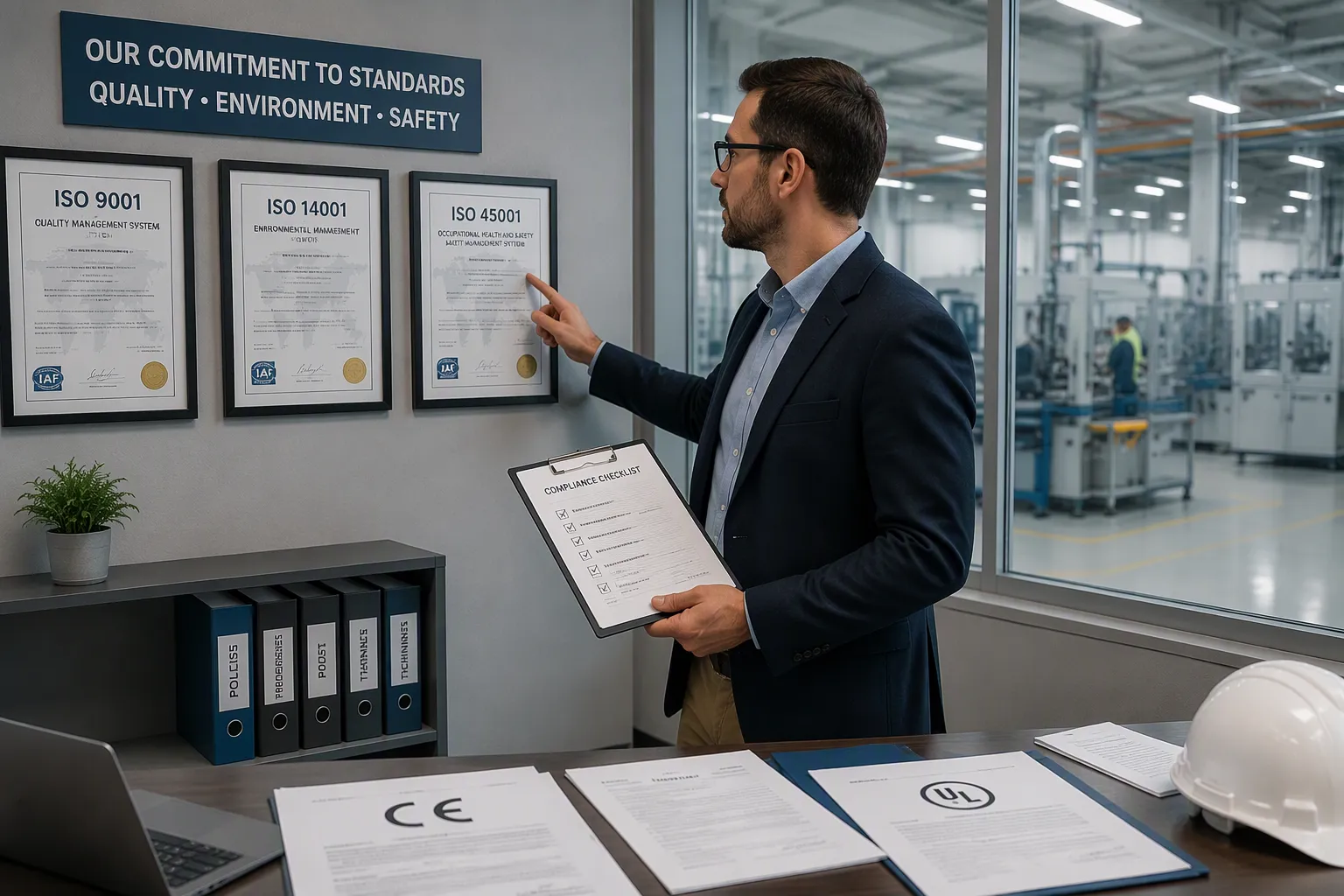
Compliance is what makes a factory one you can defend, not just one you hope is safe. Treat every certificate as a claim until you see the actual document. This section gives you the checks to run before you sign.
Start with management system standards. These show how the plant runs, not just what it ships.
ISO Standard | Purpose | Why it matters for a hardware tool manufacturing partner |
|---|---|---|
ISO 9001:2015 | Quality Management System | Makes sure product quality stays consistent and manufacturing can be repeated |
ISO 14001 | Environmental Management System | Controls how much production affects the environment |
ISO 45001:2018 | Occupational Health & Safety Management | Protects the safety of the factory and its workers |
ISO/IEC 27001:2022 | Information Security Management | Protects designs, firmware, and production data |
ISO 22301:2019 | Business Continuity Management | Keeps manufacturing going during disruptions |
ISO 50001:2018 | Energy Management System | Helps the plant use energy more efficiently |
ISO 31000:2018 | Risk Management | Manages risks in operations, the supply chain, and compliance |
Core ISO standards for hardware manufacturers usually include ISO 9001 for quality, ISO 14001 for environmental management, ISO 45001 for occupational health and safety, ISO/IEC 27001 for information security, ISO 22301 for business continuity, ISO 50001 for energy management, and ISO 31000 for risk management. The exact mix depends on the company's products, processes, and regulatory duties.
Then move to product compliance. Separate the marks that are required from the ones that add value. CE is legally required in the EU, and UL or ETL recognition is mandatory for most power tools sold through major US retail and for workplace use under OSHA. GS is not legally required, but it earns a higher retail position and stronger buyer confidence in Germany, Austria, and Switzerland. Check the directives behind the mark: the Low Voltage Directive (2014/35/EU), the EMC Directive (2014/30/EU), the Machinery Directive (2006/42/EC), and RoHS (2011/65/EU). ALL ROAD holds ISO9001, ISO14001, CE, GS, UL, RoHS, and TUV/GS, plus 16 global export compliance certifications. Use that as an example of a well-documented factory, not the only valid benchmark.
Ask for lab and third-party test reports, specification datasheets, and export compliance records. Make sure each document is current and matches the exact product you are sourcing. A certificate for a similar model proves nothing about your order.
Traceability closes the loop. Request mill test reports that document chemical composition and mechanical properties, checked against your purchase order at receiving inspection. Ask for lot and heat traceability records that link material batches to specific parts through cutting, machining, and finishing. For secondary processes that change material properties, such as heat treatment, plating, or coating, ask for process control records like furnace charts and coating thickness measurements. First Article Inspection reports per AS9102 should document complete dimensional verification, material certifications, and process validations. These records support your quality control plan and give auditors something concrete to review. Score the documentation trail alongside the plant's manufacturing capabilities, and weigh both against the design capabilities you verified earlier.
Unit price is only a small part of the decision. Total cost of ownership adds tooling and die amortization, prototype iterations, inspection fixtures, freight, and lifecycle replacement costs. A cheap quote with weak documentation often loses on these lines.
Tooling cost covers design and engineering, tool fabrication, fixtures and gauges, trial runs, and shipping and installation. Part complexity drives it up. Undercuts and side features need movable sliding cams, which add engineering hours and machining time. Abrasive materials demand carbide inserts and surface coatings. Tight tolerances push work toward slow processes like wire EDM.
Amortization turns that upfront number into a per-part figure. A $60,000 injection mold over 1,000,000 bottles per year for 2 years works out to $0.03 per bottle. A $15,000 die over 1,500 pieces costs $10 per part; over 150,000 pieces it drops to $0.10 per part. Volume shortfalls raise the per-unit contribution, so confirm your forecast before you accept a supplier-amortized model.
Cost factor | How it drives amortization |
|---|---|
Upfront cost | Tool-block material, design time, and CNC machining |
Unit price amortization | Total die cost divided by parts produced over lifespan |
Material wear | Abrasive workpieces need harder tools and coatings |
Tolerance level | Tight limits require slower, costlier processes |
Tool life | Longer guaranteed cycle life costs more to build |
Normalize every quote to identical scope before you compare. Fix volume tiers for prototype, pilot, and production lots. Attach a 2D drawing with a revision number and mark critical-to-function dimensions. State the alloy and temper, the inspection scope, and the certification needs. Ask for an open costing breakdown with every line item, so hidden assumptions surface.
A higher unit price can still win. One bidder may include first article inspection and full documentation; another may leave quality control work unpriced. Score each quote on scope completeness, tolerance understanding, and timeline basis. A factory whose design capabilities make a part easy and cost effective to produce at scale often beats a cheaper bidder once you add rework and delay. Weigh those capabilities against the prototype to production lifecycle each candidate offers, and let the total decide.
Put every candidate through the same steps. Send a scoped RFQ first. A controlled requirement baseline keeps answers easy to compare: one governing 2D drawing and 3D model revision, a stated specification hierarchy, and a rule for settling conflicts between files. Name the material grade and temper, the quantity basis for prototype, sample, and annual forecast, and the critical features, datums, and cosmetic zones. Keep non-recurring items like tooling, fixtures, gauges, and trials separate from the recurring part price. State the lead time with a clear starting event, such as purchase order, deposit, or drawing approval. List open assumptions and deviations, and name the approval owner.
Then audit the factory, in person or online. Watch how the line handles your drawing and who answers technical questions. Run a small paid pilot of 5–20 units before you commit to volume. A pilot shows the real communication pace and the quality control habits behind the sales pitch.
Score all manufacturing partners on one rubric before you look at pricing. Rate each of eight dimensions from 1 to 5, then total the scores out of 40. The dimensions cover prototyping speed, minimum order flexibility, DFM support depth, multi-site capability, certifications, supply chain transparency, communication model, and test engineering capability.
Total Score | Interpretation |
|---|---|
36–40 | Preferred partner |
30–35 | Viable with conditions |
Below 30 | High risk, reconsider |
Shortlist 3–5 candidates, send the RFQ to all at once, and score them blind. Ask the top scorers for sample DFM reports; a real review runs 30+ checkpoints across assembly, fabrication, testability, and cost. Treat a lump-sum quote without a BOM breakdown as a warning sign. A contract manufacturer that won't share DFM detail is a build to print manufacturing partner in disguise.
Check references from customers at your stage. Factories with overseas subsidiaries or joint-venture plants, such as ALL ROAD's North American subsidiary and Thailand joint ventures, may fit buyers who need regional supply options. Use that evidence to recommend a factory with confidence.
Give each factory a score on six points: in-house design team, design for manufacturability integration, prototyping and testing, customization and tooling, compliance, and total cost of ownership. This plan turns a loose shortlist into a recommendation you can defend.
Keep this checklist handy for every factory you review:
Proof of a design team, like CAD files and review records
A written DFM review of your drawing
Prototyping and test data for your application
Tooling capability for handles, heads, and assembly parts
Up-to-date compliance documents that match your exact product
A total cost comparison at equal scope
Pilot results and customer references
Present your recommendation with one shared rubric. Score every factory the same way, then show the evidence behind each score. Decision-makers can then compare candidates fairly and see why you recommend a factory with the strongest proven capabilities.
Ask if the designers are on the payroll and report to the same managers as the production line. Request CAD files and dated design review records from a recent project. Then send your own drawing and time how fast a written manufacturability review comes back.
A real review runs 30+ checkpoints across assembly, fabrication, testability, and cost. Expect specific comments on wall thickness, draft angles, and tolerance stack-up, not general praise. Treat a lump-sum quote without a bill of materials breakdown as a warning sign of a build-to-print partner.
Run a small paid pilot of 5–20 units first. The pilot reveals the real communication pace and the quality control habits behind the sales pitch. Score the results on the same rubric you used for the shortlist, then decide whether volume production makes sense.
Ask for current ISO 9001 and ISO 14001 certificates, plus product marks such as CE, GS, UL, and RoHS where your market requires them. Request lab and third-party test reports, specification datasheets, and export compliance records. Confirm each document matches the exact product you are sourcing.
Yes. One bidder may include first article inspection and full documentation, while another leaves quality control work unpriced. Normalize every quote to identical scope, volumes, tolerances, and compliance requirements. A factory whose design work makes a part easy to produce at scale often wins on total cost.
Identify a reliable factory that manufactures tow ropes and cargo straps by defining specs, using targeted channels, auditing suppliers, comparing quotes, and trial orders.
Find out more about our news >
Learn how to find a cargo net factory that supports recurring bulk orders. Vet capacity, quality systems, and scalability to secure a reliable supply partner.
Find out more about our news >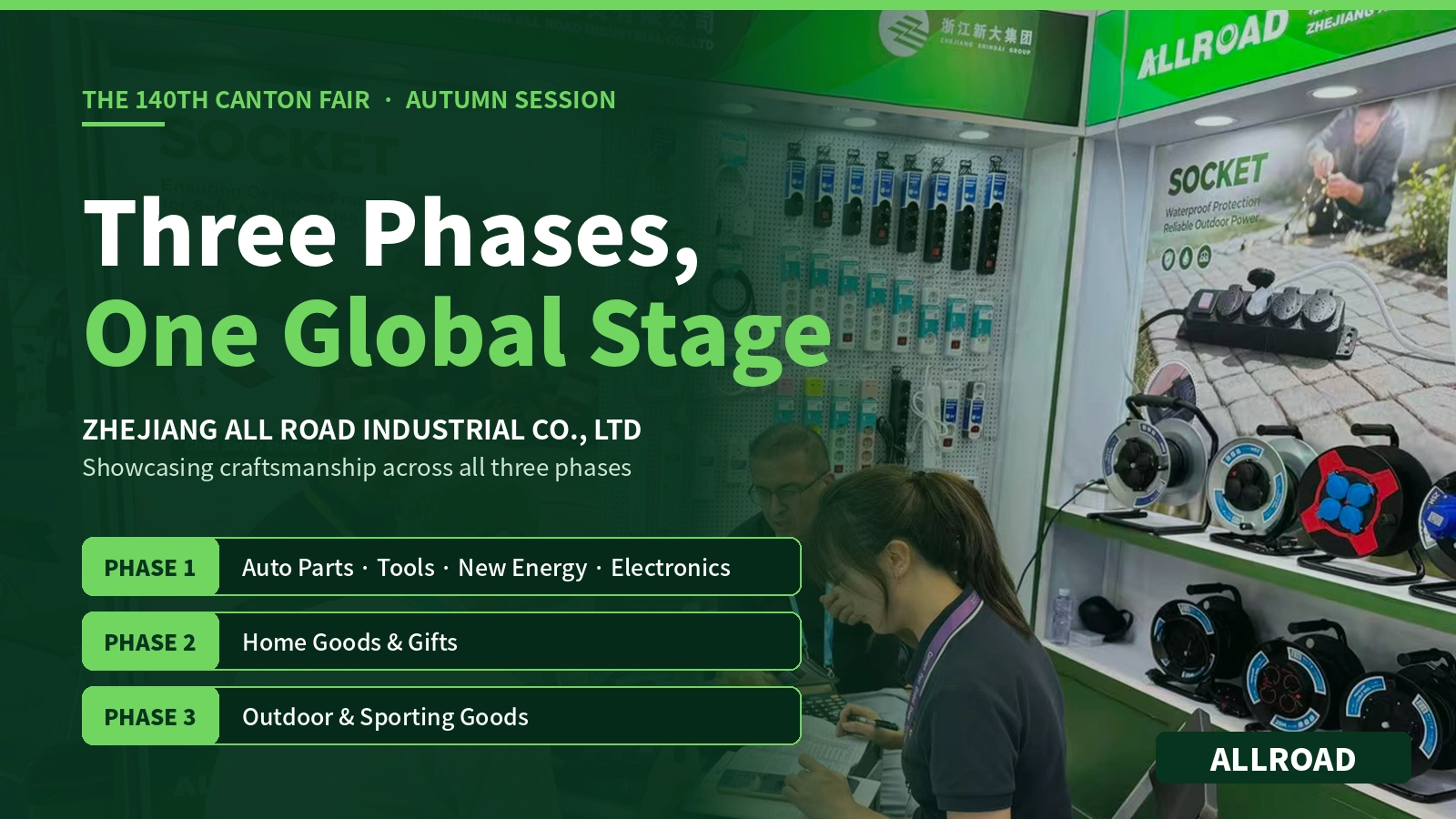
Zhejiang All Road Industrial Co., Ltd. Showcases Craftsmanship at the 140th Canton Fair (Autumn Session) and Engages Buyers from Around the World
Find out more about our news >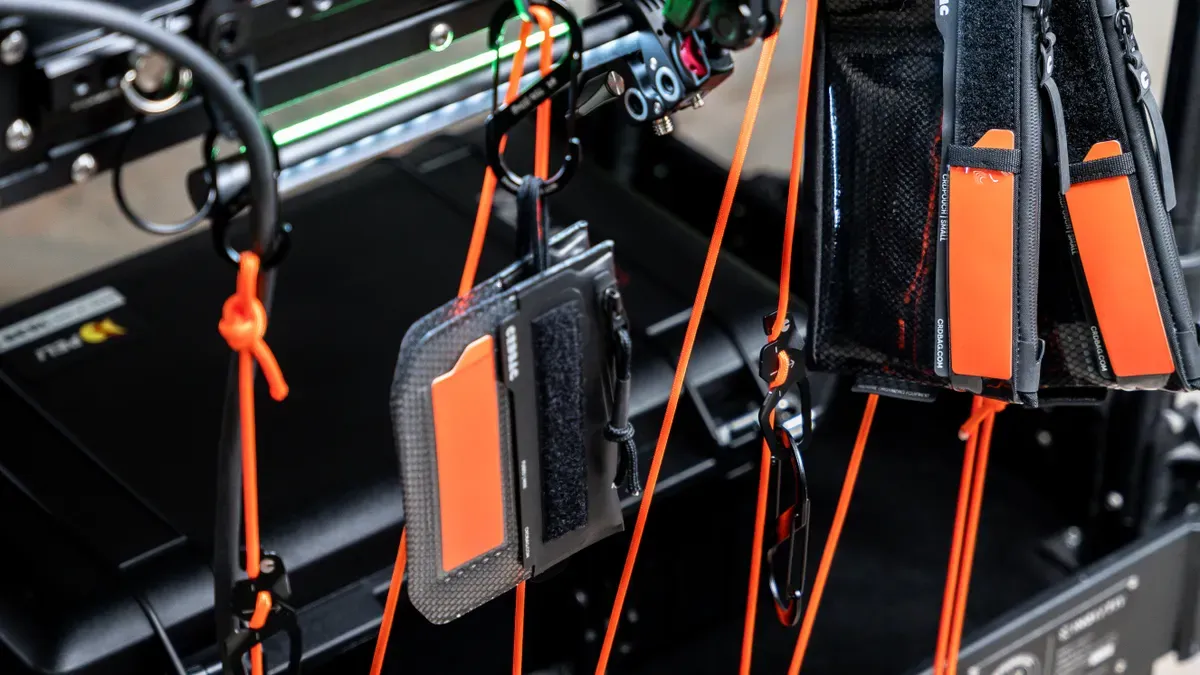
To find a reputable luggage strap manufacturer in China, research hubs, vet credentials, test samples, and negotiate clear terms to protect your brand.
Find out more about our news >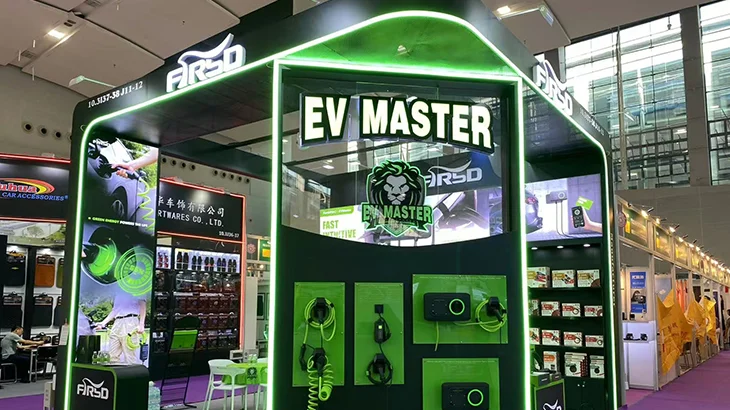
As an important international trade fair, the Canton Fair attracts merchants from all over the world to come and discuss cooperation. From April 15 to May 5, Aolu Industry and Trade Co., Ltd. participated in the fair with its core products and exchanged ideas with merchants from home and abroad.
Find out more about our news >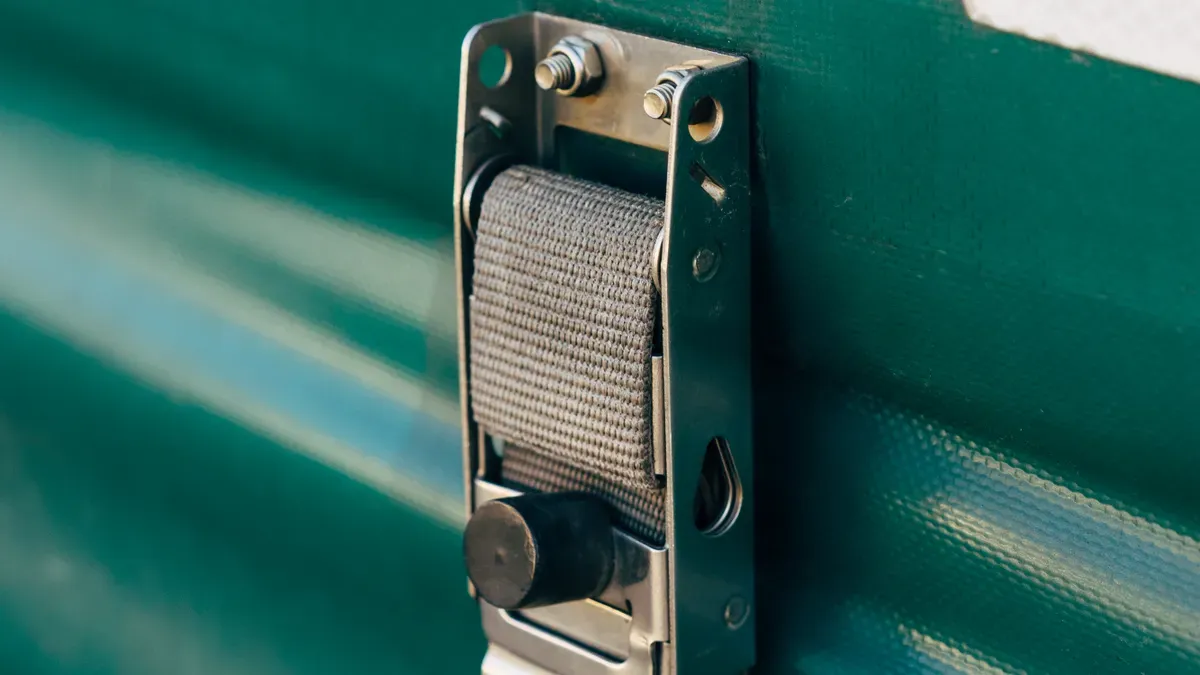
To recommend a Chinese factory for heavy duty cargo straps, check ISO certifications, third-party testing, and export experience. Verify compliance and support.
Find out more about our news >