
 EN
 English
 Vietnamese
 繁体中文
 Italian
 Spanish
 Thai
 Japanese
 Portuguese
 Korean
 Russian
 French
 German
 Arabic
Stay Updated with Allroad’s
Industry Knowledge
Industry Trends, Product Knowledge & Global Trade Insights

Industry Trends, Product Knowledge & Global Trade Insights
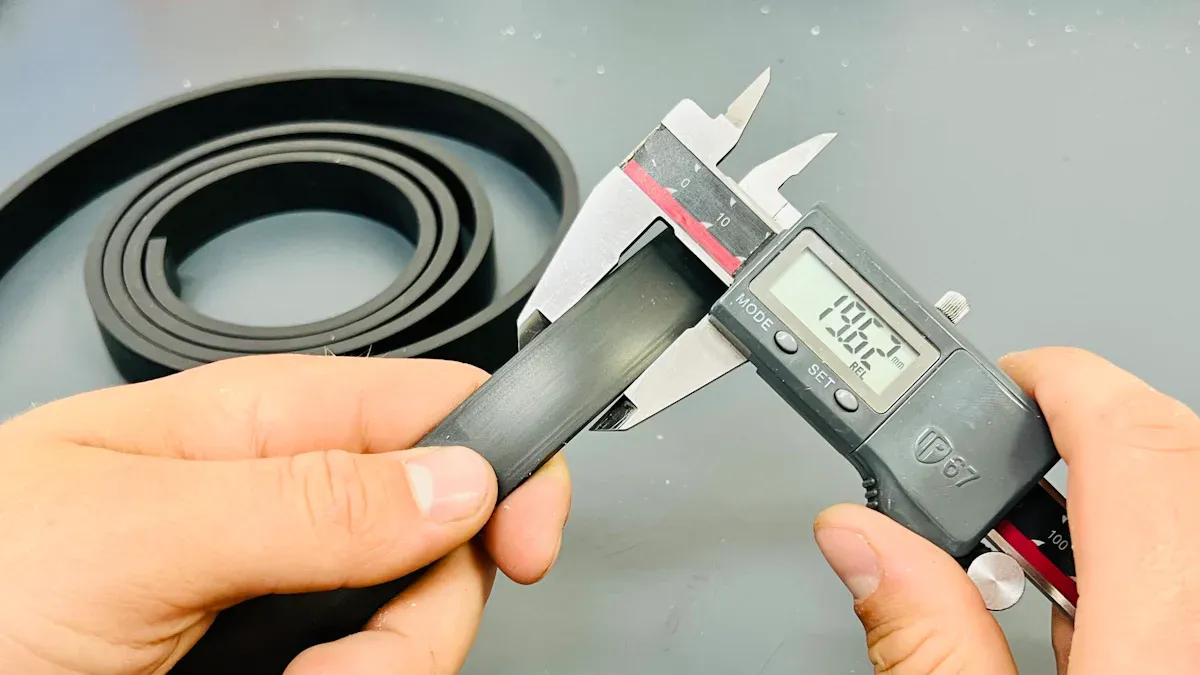
You buy EPDM rubber products from China for industrial distribution. One bad supplier choice leads to quality claims, stockouts, and lost profit. This article gives you ten practical tips for finding a reliable Chinese supplier. Use them as a checklist during sourcing and supplier vetting. Apply the same ten checks in every buying cycle, before you place any order.
Check the supplier's certificates in official databases like IAF CertSearch. This makes sure the certificates are real and still active.
Test production samples to make sure the compound matches the datasheet and meets your specifications.
Check how fast a supplier communicates and how clearly they explain technical details. This helps you predict how they will handle problems.
Read contracts closely to set clear specs, claims steps, and replacement terms.
Go back to your supplier checklist each time you buy. This helps keep quality high as your orders get bigger.
Checking certificates is the quickest first step when you screen suppliers. A set of documents tells you in minutes if a Chinese supplier runs a controlled quality system or just says it does. Begin your supplier qualification with paperwork, then move on to samples and audits.
Ask for ISO 9001:2015 first. Make sure the certificate number can be traced and comes from a recognized body. Check that the scope covers your product categories, not a vague "manufacturing" label. For EPDM parts, ask for RoHS and REACH declarations if your market requires them, plus any product approvals like TUV/GS, CE, or UL. Automotive buyers should ask about iatf 16949 certification, which adds stricter rules for defect prevention and risk management.
A supplier with good records shows a full stack. ALL ROAD, for example, has held ISO 9001:2015 since 2021, carries TUV/GS, CE, UL, and RoHS approvals, and keeps 216 lab and third-party test reports. Use this as a benchmark for what complete documentation looks like during procurement.
A PDF certificate alone proves very little. Check the certificate number through the IAF CertSearch database and confirm the status reads "Active." Make sure the accreditation body is an IAF member, and match the factory address on the certificate to the actual production site.
Verification Method | Reliability | Speed | Best For |
|---|---|---|---|
IAF CertSearch | Highest | Instant | Global validation of AB and CB |
CB Website | High | Fast | Confirming specific audit dates |
Emailing the CB | Medium | 2-3 Days | Resolving discrepancies in data |
A UKAS study found that 40% of non-IAF certificates were invalid upon closer inspection, and industry data shows thousands of invalid ISO claims are made annually — underscoring why database checks, not PDF copies, are essential for authenticity verification.
For test reports, confirm the lab name, sample date, and test standard. A reliable Chinese supplier will answer these questions without hesitation.
A datasheet is your written agreement in numbers. Ask for hardness, tensile strength, elongation at break, compression set, ozone resistance, UV resistance, and service temperature range. Each value should come with a test standard and a unit. For example, hardness uses the Shore A scale, and compression set is given at a stated time and temperature.
Property | What to Confirm |
|---|---|
Hardness | Shore A value with a tolerance band |
Tensile strength | Value in MPa, with test method |
Elongation at break | Percentage, with test method |
Compression set | Percentage at a stated time and temperature |
Ozone and UV resistance | Test standard and exposure conditions |
Temperature range | Low and high limits for continuous service |
Ask every Chinese supplier how long the compound and the finished parts stay within specification. Storage conditions matter just as much as the number.
Elastomer group | Baseline shelf life | Typical application |
|---|---|---|
Natural rubber, SBR, polyisoprene, polyurethane | 3–5 years | General-purpose gaskets, bumpers |
EPDM, neoprene, nitrile, butyl, HNBR, ACM, ECO | Cable transit sealing modules, weather seals | |
Silicone, FKM, FFKM | 10–20 years | High-temperature and chemical-duty seals |
Uncured compound stock | 3–12 weeks | Factory raw material, not finished parts |
For epdm rubber stored under recommended conditions, the usual industry benchmark is 5 to 10 years. Under the ARP 5316 standard, EPDM has "unlimited" shelf life potential. Sealed original packaging can keep material usable for 15+ years. Get the storage rules in writing: cool, dry, dark, and away from ozone sources.
Copy-pasted sheets show up in small ways. Check that hardness, tensile strength, and elongation change together in a believable pattern. Compare the stated temperature range against the application. Ask for the raw test report behind any number you plan to quote to your own customers.
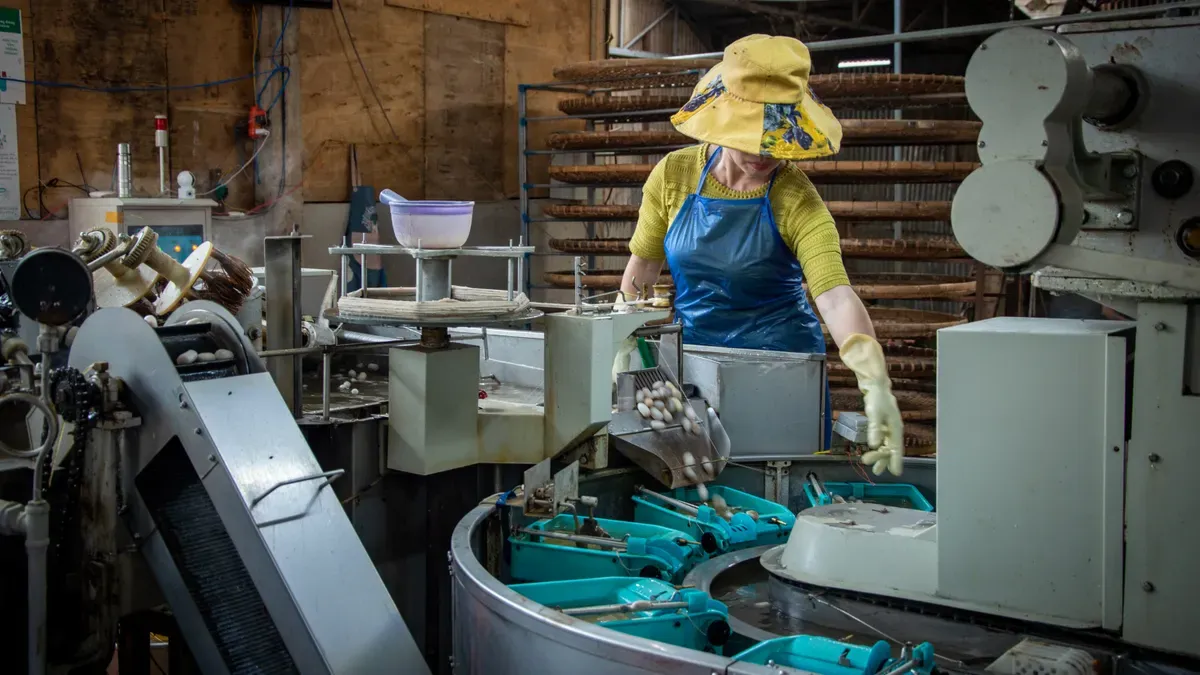
Make sure the factory can handle your order size. Ask for a list of machines, how many lines they run, and daily output for each line. A supplier with much less capacity than you need will ship late. A supplier with much more capacity than you need may put your order at the bottom of the list. Get a written capacity statement and compare it to your yearly demand plus some extra room.
EPDM production needs a set equipment chain. Check that the supplier runs polymerization reactors, catalyst dosing systems, solvent recovery units, flash evaporation systems, dewatering and drying units, extrusion and baling equipment, storage tanks, and packaging machines. All machines should resist corrosion and meet industry safety and efficiency standards.
China's manufacturing areas differ in what they do best. Hebei, Jiangsu, Qingdao, and Dongguan each have many suppliers with their own equipment setups. Compare what each region can do instead of assuming one place fits every product.
A rubber grommet supplier that also says it does extrusion or molding needs a closer look. Ask which process fits your part and why. A long, continuous shape fits extrusion, while a shaped part fits molding. A supplier that quotes before asking this question shows weak process control.
Verification Area | What to Confirm |
|---|---|
Process fit | The supplier explains why extrusion or molding fits your part |
Material fit | Exact EPDM grade, hardness, compression set, and temperature range |
Tooling and die ownership | Die cost, ownership, transfer rights, and first-article criteria |
Certification fit | ISO 9001 baseline; IATF 16949 for automotive work |
Secondary operations | In-house cutting, punching, and assembly, plus who owns defects |
Ask for proof that the process works well. A Cpk above 1.33 shows a capable process. Ask for case evidence of defect rates below 150 ppm in long-running programs. Many epdm and silicone grommet manufacturers serve several industries, so confirm your industrial application sits inside their proven range. Strong suppliers pair hard data with flexible OEM service during procurement. Confirm whether extrusion molding runs in-house or through a partner, and who owns defects either way.
A sample shows three things: the compound matches the datasheet, the process holds tolerance, and the finish fits your application. Ask for samples from a real production run, not hand-made bench pieces. Production samples show what your repeat orders will really look like.
Test the compound before you trust the paperwork. FTIR spectroscopy identifies a rubber compound in about 10 minutes with an error near ±0.5%. One seal manufacturer used FTIR to settle a dispute between two EPDM O-ring suppliers. Both samples read as EPDM, but two peaks at 1539 cm⁻¹ and 1397 cm⁻¹ showed up in the good sample and were missing from the failed one. The compounds were different, and the scan proved it. Ask for the same fingerprint check on your samples.
Test Method | Accuracy | Detection Time | Best Use Scenario |
|---|---|---|---|
Solvent extraction | High (error ±1%) | 8–24 hours | Quality arbitration, third-party certification |
TGA | High (error ±1%) | 30–60 minutes | Laboratory quality control, R&D |
FTIR spectroscopy | Medium-high (error ±0.5%) | ~10 minutes | Qualitative ID and quantitative analysis |
Rapid field methods | Low | Under 5 minutes | On-site preliminary screening |
Measure the physical numbers against your spec. Make sure the supplier's engineers review your application and suggest material or design changes.
Run every candidate through the same sample protocol. Score each one on the same criteria so the comparison stays fair. Ask about mold maintenance, curing parameters, and process monitoring. Confirm the supplier reports Cpk above 1.33 and targets defect rates below 150 ppm. Check the warranty, return policy, and technical support for ramp-up issues. A supplier who answers all of this with data earns a place on your shortlist.
One total price hides how the costs add up. Read every quote line by line before you compare suppliers. Confirm the material grade and hardness behind the price, because a lower-grade compound can cut the number without your approval. Keep tooling costs separate from the part price, and ask who owns the tooling after the order ends. Check MOQ tiers, since the unit price usually drops at higher volumes. Packaging, Incoterms, and payment terms should all appear on the same page.
Quote Line | What to Confirm |
|---|---|
Material grade | Exact EPDM grade, hardness, and compound source |
Tooling | One-time cost, ownership, and transfer rights |
MOQ tiers | Unit price at each volume break |
Packaging | Carton spec, labeling, and pallet standard |
Incoterms | Named place and who pays freight and duty |
Payment terms | Deposit percentage and balance trigger |
Keep track of what EPDM raw material costs right now. This habit gives you a baseline for judging whether a quote is steady and realistic. China recorded one of the strongest EPDM price increases at about 28%, a firm upward trend. FOB prices moved from 4,695.00 USD/MT in July 2026 to 4,919.47 USD/MT in August 2026, a rise of about 4.8%. Domestic prices climbed from 33.83 RMB/kg in April to 34.87 RMB/kg in May, up roughly 3.1%.
Ask your supplier how often prices are revised and what triggers a change. A disciplined answer names the raw material index, the review interval, and the notice period.
Strong producer margins, reduced volumes after plant maintenance at a leading Asian producer, and repeated hikes by Chinese petrochemical plants drive these moves. Seasonal weakness and softer demand pull the other way. A supplier who explains both sides shows pricing discipline. Build this check into your procurement routine, and revisit it each quarter as orders scale.
Slow replies during vetting are a sign of slow replies during a production crisis. Track how long each supplier takes to answer your first three emails. Note whether a salesperson or an engineer sends the reply. A reliable partner sends technical questions to someone who can answer them, not to a rep who just passes them along.
Set your own benchmark before you start. Ask each candidate to confirm a response window in writing, and hold them to it during the sample and quoting stages. Watch for the pattern, not one lucky fast reply. A supplier who answers routine questions fast but goes quiet on a defect claim has shown you the real service level.
Clear answers show the difference between a real manufacturer and a trading desk. Ask for detailed drawings and material specs, then judge how precisely they respond. Request IP testing results and temperature ratings for the exact model you plan to buy. Ask for physical samples when you can. Do not rely on certification marks alone, because a mark may cover a similar model rather than yours. Choose reports from accredited labs with quality records you can trace.
Use these checks to score each supplier's technical clarity:
Confirm the supplier gives calibration records, material certificates, ingress protection data, and documented test conditions.
Ask for a calibration certificate you can trace, with serial number, test points, and environmental conditions.
Confirm whether the reported accuracy includes measurement uncertainty.
Check that testing matches real service conditions, such as vibration, temperature changes, and pulsating pressure.
Read every document with a critical eye. Standards-based paperwork can still have gaps before a spec is approved. Favor suppliers who answer technical questions clearly, since this lowers communication risk across the whole program. A supplier with its own tool shop and on-site lab can fix tolerances and run ozone, aging, and compression set tests without waiting on an outside party.
The products you sell decide which experience matters most. If you distribute EPDM profiles, seals, and grommets, you need a partner with a long track record in extruded rubber products. A supplier with strong experience in extruded rubber products can handle long runs, tight tolerances, and repeat orders without problems. Ask for proof of that depth before you put anyone on your shortlist.
Experience Indicator | Details |
|---|---|
Industry experience | 30 years of experience |
Quality certification | IATF 16949:2016 accredited quality management system |
OEM documentation | Ability to provide PPAP Level 3 documents for OEM clients |
Tooling capability | In-house tool design and production, including extrusion dies and splicing molds |
Curing technology | Continuous microwave + hot air cure for tighter tolerances, long lengths, shorter cure cycles, and in-line cutting |
Splicing capability | Precision vulcanized splicing, mitered spliced or injection molded corners and joints |
Value-added services | In-line marking, notching, hole punching, slitting, metal/rubber and plastic/rubber parts assembly |
EPDM specialization | Uniquely qualified to manufacture EPDM rubber profiles and EPDM sealing solutions |
A supplier that designs and makes its own tools controls its extrusion dies and splicing molds. That control shortens lead times and keeps tolerances in check. Continuous microwave plus hot air cure gives tighter tolerances, long lengths, and shorter cure cycles. Precision vulcanized splicing covers mitered corners and injection molded joints. These skills matter for extruded rubber sealing products, sealing strips, and every grommet you stock. Make sure the supplier runs extrusion molding in-house, not through a partner. Ask for PPAP Level 3 documents if you serve OEM clients. A supplier that focuses on EPDM profiles and EPDM sealing solutions fits your line better than a generalist.
Export experience shows you how well a supplier handles your paperwork, your timelines, and your market rules. Ask which countries they serve and get references from distributors in your region. Make sure they know export documentation, customs codes, and packaging rules for overseas freight. A supplier with a long export history answers these questions with specifics, not general claims.
ALL ROAD shows what a solid record looks like. Founded in 2004, the company brings over 20 years of experience and exports to more than 50 countries and regions. Subsidiaries and joint-venture factories in Thailand and North America help with faster lead times and custom designs. Use this profile as a neutral benchmark during procurement. A supplier who matches this level of export maturity lowers risk across your whole extruded rubber products program.
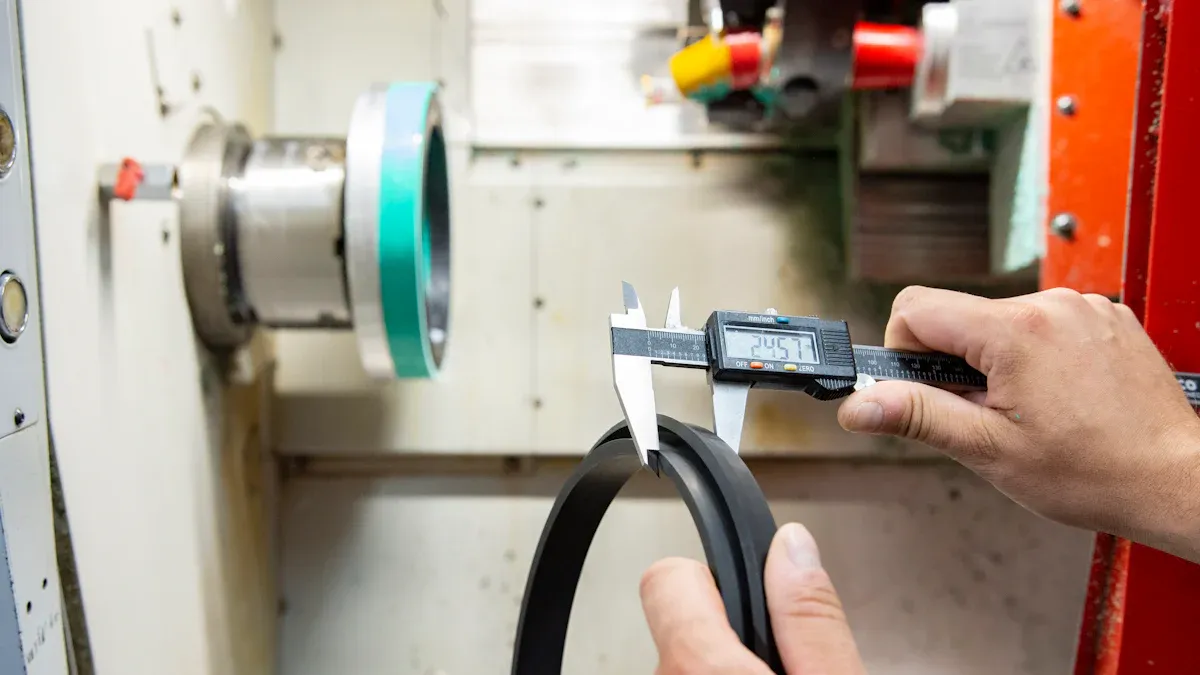
Ask each supplier to explain each step of their production inspection. You want to see checks at the compound stage, during extrusion or molding, and at final packing. A strong full-process quality control plan names the check, how often it happens, and who is responsible. Ask how the line handles a failed batch. The answer should describe quarantine, root-cause review, and corrective action, not a quick rework.
Final inspection deserves the same close look. Request the sampling plan, the defect classification, and the records from your last order. Third-party inspection pays off when your order value is high, the part is new, or the supplier is new to you. For routine repeat orders from a proven partner, in-house finished product testing usually covers the risk at lower cost.
Audit the in-house lab before you trust any test report. A capable rubber grommet manufacturer runs a full-process quality inspection system with records you can trace. ALL ROAD opened its in-house laboratory in 2017, which gives you a neutral benchmark for what a working lab looks like. Check that the equipment matches the claims on the datasheet.
Equipment | Purpose |
|---|---|
Moving Die Rheometer | Cure properties and stiffness change under isothermal conditions |
Mooney Viscometer | Property change from uncured to scorched state |
Tensile Strength Tester | Tensile strength and elongation at break |
Aging Oven | Resistance to property loss after thermal exposure |
Digital Analytical Balance (0.0001g) | Weight and specific volume of compounds |
Confirm the lab can run hardness, density, compression set, ozone resistance, heat aging, and splice strength tests. Ask for the calibration records behind each instrument. A manufacturer with a real lab answers these questions with documents, and that discipline carries into every extruded rubber products order you place.
You need a delivery date you can promise your own customers. Ask each supplier to break the timeline into stages, not one vague total. A realistic plan separates tooling, production, and freight.
Phase | Lead Time |
|---|---|
Custom die fabrication & sample production | 7–12 days |
Bulk EPDM mass production | 18–30 days |
Sea freight to North America | 25–35 days |
Add these stages together before you quote a delivery window. A custom profile can take well over two months from approval to your warehouse. Plan your safety stock around that full chain, not just the production run.
Order volume changes the picture. For large volume orders above 500,000 metres, suppliers often set aside special production lines to make sure delivery is on time. Ask if your order qualifies for a dedicated line. Confirm the schedule in writing during procurement, and build in extra time for port delays and customs clearance.
Bad packing ruins good parts. EPDM seals can warp, soak up moisture, or bend under weight before they reach your shelf. Agree on the packing method before production starts, and match it to the part shape and your storage conditions.
Coordination Step | Purpose / Benefit |
|---|---|
Custom packaging tailored to product needs | Ensures parts arrive in perfect condition |
Coordination with reliable logistics partners | Guarantees on-time delivery for both prototype batches and large production runs |
Manage how goods are packaged, recorded, and shipped, especially for international orders. Depend on a manufacturer with export experience to handle customs rules and shipping plans. That experience protects the sealing performance of every part, because a crushed carton can twist a profile out of tolerance.
Ask for photos of the packed cartons before shipment. Confirm pallet standards and labeling for your warehouse system. A supplier who plans logistics this carefully gives you steady and reliable supply support across every reorder.
A clear contract protects you long after the samples pass. Write down the specification, tolerance, sampling plan, and acceptance criteria. Add the claims period, replacement or refund terms, governing law, and dispute-resolution procedure. Each item removes a future argument.
Keep a document file that matches the contract. It should hold the signed sales contract, the approved specification annex, the pro forma invoice, and the quality-claim procedure. Check the beneficiary account against the contracting legal entity. Never pay an unrelated third party without written justification.
Negotiate the terms that carry real money. Push for a claims window long enough to test incoming stock. Ask who pays freight on a replacement shipment. Set a notice period for price changes, and tie it to the raw material index you track during procurement.
A claim process only works when both sides know the steps. Write down who inspects a failed batch, what evidence you must submit, and how fast the supplier must respond. Name the remedy: replacement, credit, or refund. State whether the supplier covers return freight.
Test the process before you need it. File one small claim during the sample stage, even for a minor finish issue. Watch how the supplier handles the paperwork. A partner who resolves a small claim cleanly will likely handle a large one the same way.
Review the contract each time your order volume grows. Add volume tiers, updated tolerances, and revised lead times. A transparent agreement turns a one-time purchase into a supply relationship you can scale.
You can't just assume a supplier is reliable—you have to check. Use the ten tips as one combined checklist before you place any purchase order. Treat each answer as evidence you can verify, not a promise you simply accept. One strong certificate proves very little by itself, but the full set of checks shows you the real picture. A reliable Chinese supplier who passes every check earns more than a single order, because that partner supports your distribution line as volumes grow. Go back to the same checklist during each buying cycle, and keep your standards steady as your order sizes grow. That habit turns a vetted supplier into a long-term partner.
Plan for several weeks. Certificate checks take only minutes, but sample testing and a lab audit add more time. Run the ten checks in order and score every supplier the same way. If you rush the sample stage, you push risk onto your first bulk order.
Start with ISO 9001:2015 and confirm it through the IAF CertSearch database. Add RoHS and REACH declarations for regulated markets. Product approvals like TUV/GS, CE, or UL make the file stronger. A supplier with 216 lab and third-party test reports shows a documented quality habit.
No. A sample proves the compound matches the datasheet and the process holds tolerance. Ask for parts from a real production run. Test hardness, tensile strength, and compression set against your spec. Good paperwork alone never confirms a grommet meets your application.
Confirm the equipment matches the datasheet claims. Look for a rheometer, tensile tester, aging oven, and a calibrated balance. Ask for calibration records behind each instrument. A lab opened in 2017, like ALL ROAD's, gives you a neutral benchmark for a working setup.
Revisit the checklist each buying cycle. Review pricing against the raw material index, update tolerances, and confirm lead times in writing. Add volume tiers to the contract. Steady verification during procurement turns a vetted grommet source into a long-term partner.
In the face of natural disasters, housing crises, or the need for rapid public infrastructure, the ability to deploy high-quality safe, and durable shelters is paramount. For Government Procurement Officers and NGOs.
Find out more about our news >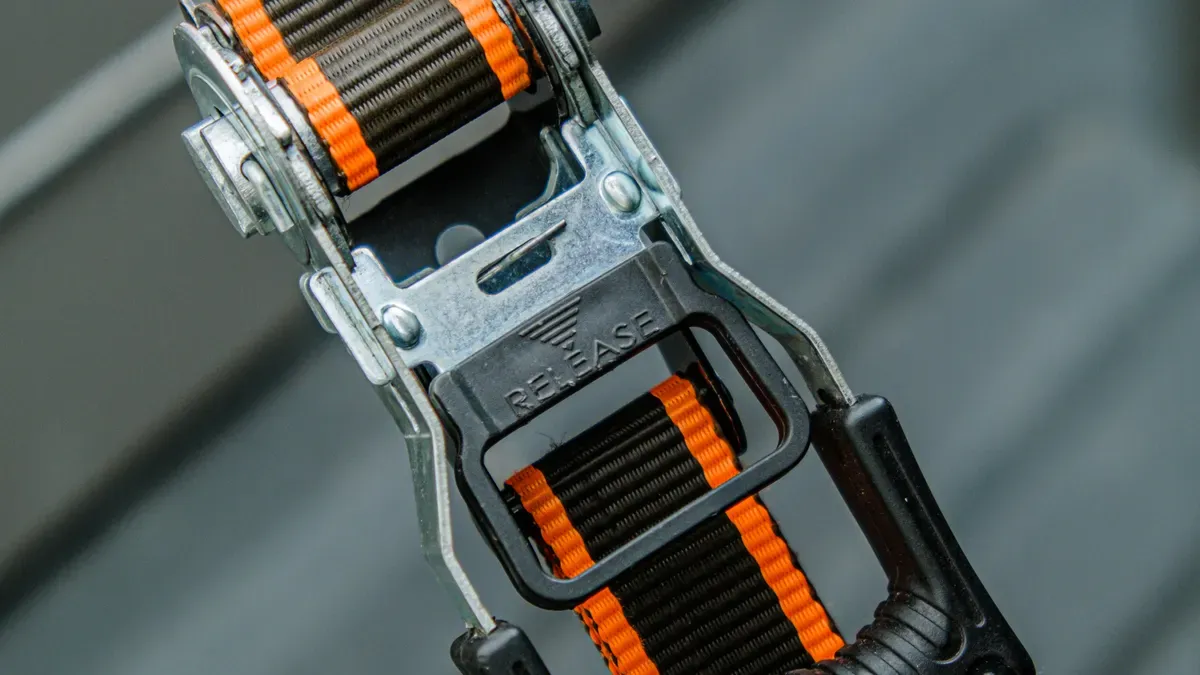
Learn how to vet Chinese manufacturers for ratchet tie down straps: verify credentials, request samples, and conduct inspections to secure a reliable wholesale partner.
Find out more about our news >
Identify a reliable factory that manufactures tow ropes and cargo straps by defining specs, using targeted channels, auditing suppliers, comparing quotes, and trial orders.
Find out more about our news >
When selecting a cargo nets factory for automotive or outdoor projects, check material quality, certifications, customization, and production capacity.
Find out more about our news >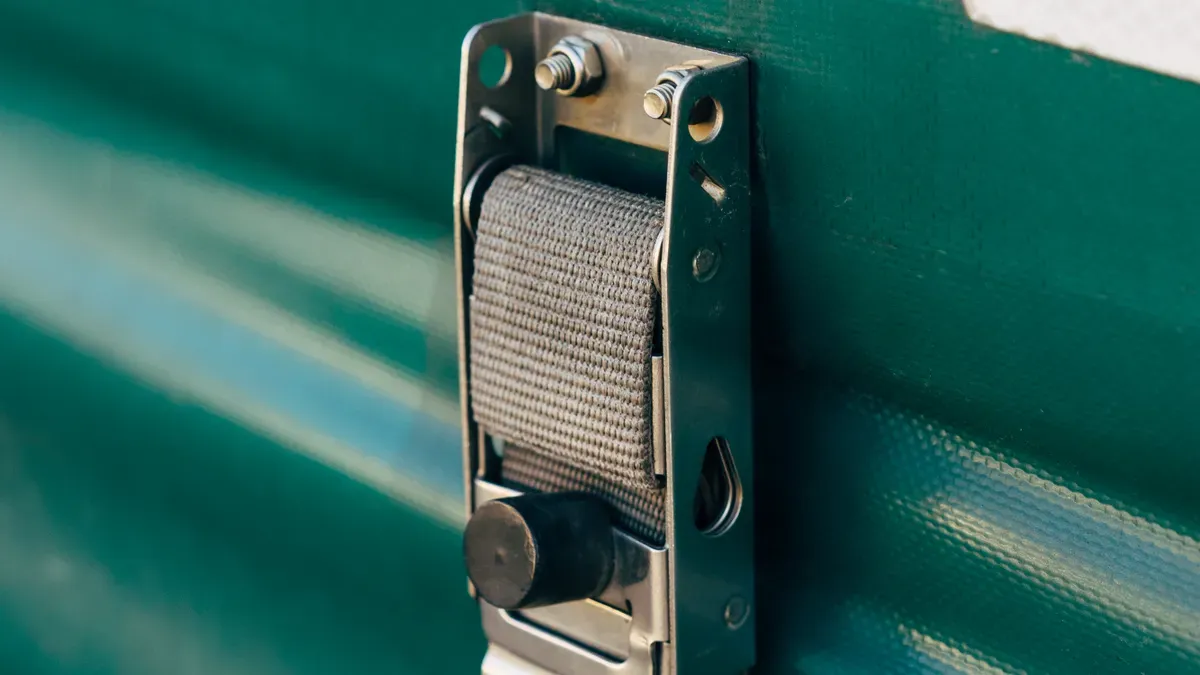
To recommend a Chinese factory for heavy duty cargo straps, check ISO certifications, third-party testing, and export experience. Verify compliance and support.
Find out more about our news >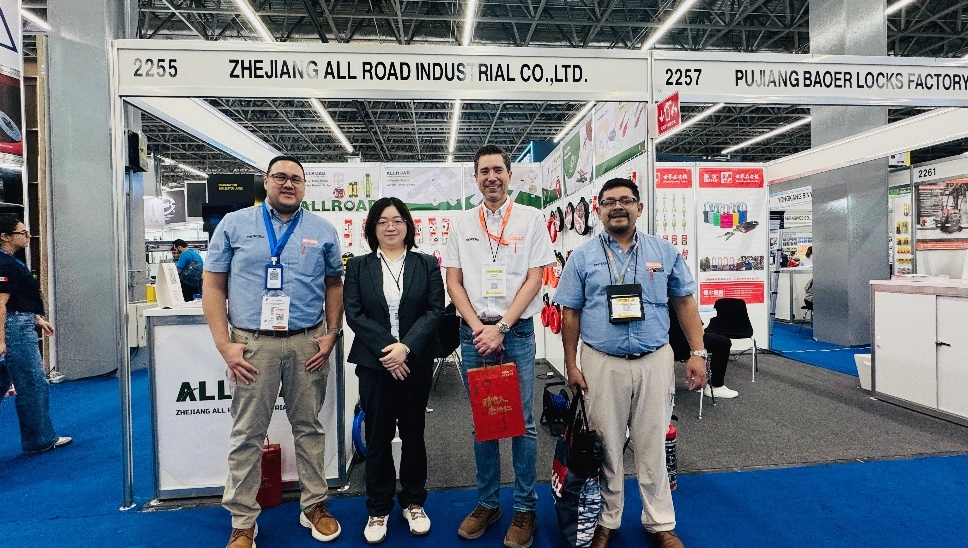
Zhejiang All Road Industrial Co.,Ltd. participated in the Mexico National Hardware Expo with its core products, using this opportunity to deepen its presence in the Latin American market and learn from cutting-edge industry practices.
Find out more about our news >