
 EN
 English
 Vietnamese
 繁体中文
 Italian
 Spanish
 Thai
 Japanese
 Portuguese
 Korean
 Russian
 French
 German
 Arabic
Stay Updated with Allroad’s
Industry Knowledge
Industry Trends, Product Knowledge & Global Trade Insights

Industry Trends, Product Knowledge & Global Trade Insights
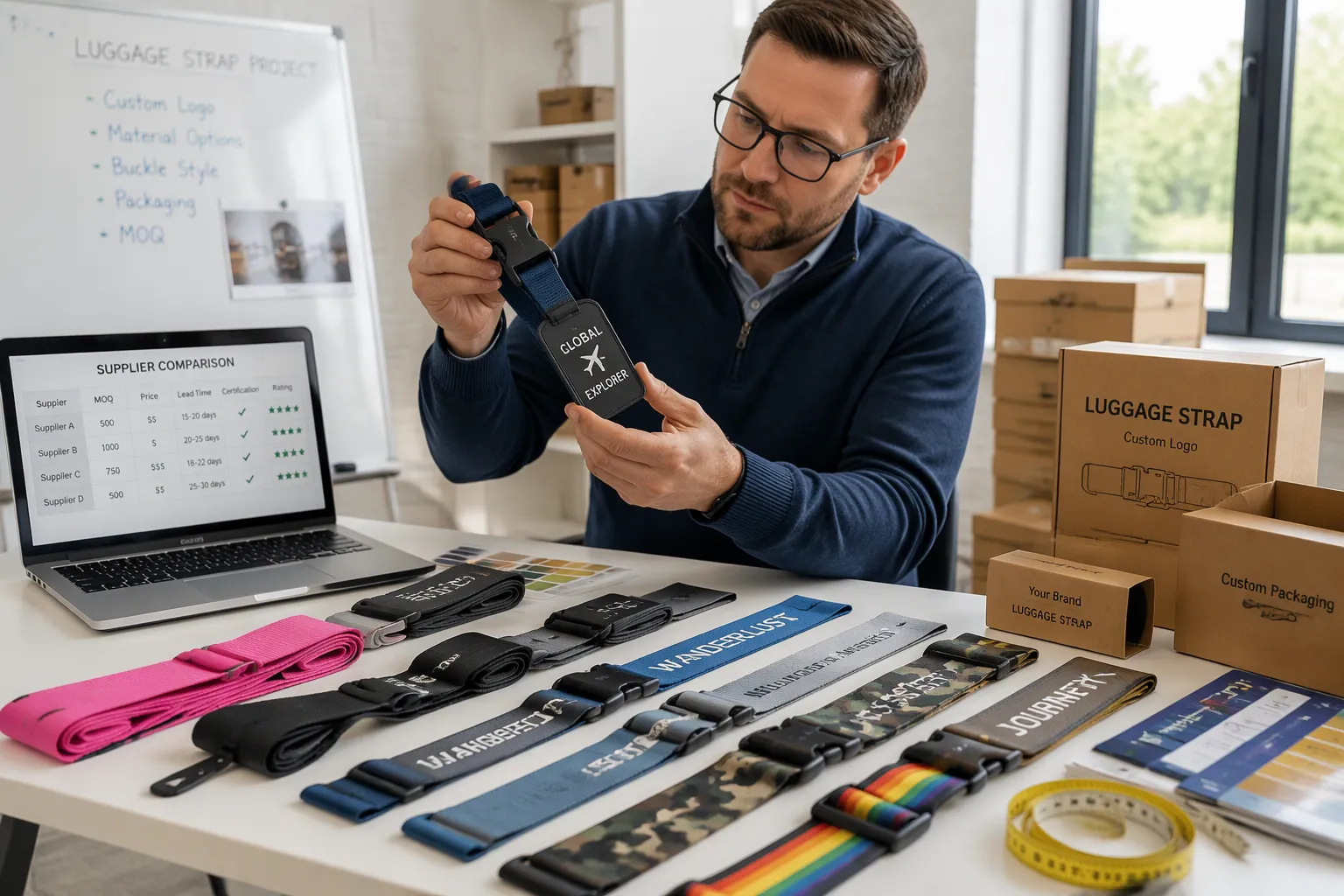
To recommend an OEM supplier for custom luggage straps, start with facts, not feelings. Write a spec that locks in every color, length, and packaging detail, then hold each supplier to it. A five-step method keeps the choice fair: written spec, skill check, rules review, cost comparison, and a scored pick. Details matter here. A wrong color, a length outside the limit, or a packaging mistake means rework and late shipments. Price alone cannot make the choice. Set limits in numbers, not words. Ask for lab dips, measured samples, and packaging proofs. The right partner proves each requirement before mass production starts.
Write a detailed spec that locks in every color, length, and packaging requirement.
Check what the supplier can do by asking for lab dips, measured samples, and packaging proofs.
Check the compliance papers and test reports before you make a short list of suppliers.
Compare prices and delivery times using detailed quotes and clear minimum order quantities.
Use a scorecard with scores and a small test order to make a fair recommendation based on evidence.
A written spec turns your design idea into words the factory understands. Start with color, then lock down length and packaging. Each part needs a number, a reference, or a physical standard that you and the supplier can both check.
Turn every brand color into a Pantone reference or a similar color standard. A digital file alone will not work. Factories need a physical target. Follow these steps to build a reliable color brief, as outlined by FY Bag Custom:
Turn design language into factory language. Note how each color should look on different materials. PU looks a little warmer and nylon a little cooler, so adjust brightness and saturation to keep them matched.
Ask for lab dips on the actual fabric, webbing, and trim. Check them side by side in daylight and in normal store lighting.
Make a sample strap to see how the color works with hardware, logo, stitching, and lining.
Lock in each color with its code, material type, recipe, supplier, and test report. Set an acceptable color tolerance for bulk production.
Junyuan Bags recommends approving a physical color standard before production and allowing plus or minus five percent color variation as an industry tolerance. For multi-batch orders, FY Bag Custom sets the acceptance tolerance at a difference of 1.5 or less. Source all rolls from one dye batch and compare incoming rolls under standard lighting. Personalization methods include embroidery, printing, sublimation, and weaving. Each method holds color differently, so confirm the method before you approve the dip.
Length and packaging needs vary by strap style. Use this table from DHgate as a starting reference for your spec:
Strap style | Typical length range |
|---|---|
Single around-the-case belt | Approx. 40–72 in adjustable |
Cross strap (two intersecting belts) | Each belt often 40–78 in adjustable |
Connector / add-a-bag strap | Approx. 10–24 in adjustable |
Shoulder or SmartLink-style attachment | Approx. 30–55 in adjustable |
A 79-inch TSA-friendly strap and 2-inch heavy-duty polyester webbing are common requests. State the exact length, the tolerance, and the buckle type in your written requirements.
Packaging options range from simple to premium. Baijiabags lists printed polybags, custom hangtags, care labels, barcode labels, gift boxes, and carton marks. Lower MOQ options include plain polybags and simple hangtags. Higher MOQ options include custom printed boxes and premium packaging sets. For a custom luggage set, specify multi-packs such as 2-packs and private-label cartons. Note that custom stackable luggage sets differ from single-strap orders in labeling and pack-out. A custom luggage set may need set-level barcodes and dividers. Stackable luggage sets often ship flat with coordinated carton marks. Build these details into your packaging spec early.
Ask for test data, not promises. Webbing strength, buckle reliability, and durability tests show whether a factory is truly capable or just hopeful. Reviews say some straps loosen over time. A common cause is webbing and buckles that do not work well together. Even a good ladder-lock adjuster can slip when the webbing is too smooth for the slot shape.
Ask for the full set of tests. ECQA's bag inspection checklist lists a load test with the right weight. This checks handle strength, strap attachment, stitch durability, and structural stability. It also includes a strap strength check to see how well it resists separation under normal handling. Carol Hardware describes tensile testing in two forms. One is an instant test that mimics a sudden pull. The other is a lasting test that records steady resistance against material fatigue. Cycle testing may run hundreds or thousands of open-and-close cycles. Cold exposure can make some plastics less able to handle impact.
ALL ROAD shows the standard to look for. Founded in 2004 and based in Zhejiang Province, the company has more than 20 years of experience. It has an in-house R&D team, 38 authorized patents, OEM services, and customers in more than 50 countries and regions. That track record gives you a supplier with documented processes behind each strap.
Fit depends on width, hardware, and how the strap works with the case. Use this table from WebbingMaker as a starting reference for your specification:
Webbing Width | Tensile Strength | Typical Application |
|---|---|---|
25mm | 2,000-3,000 lbs | Light luggage, personal straps |
38mm | 3,500-5,000 lbs | Standard checked luggage |
50mm | 5,000-8,000 lbs | Heavy-duty luggage, outdoor gear |
16mm (Tubular) | 1,500-2,500 lbs | Decorative straps, light duty |
Standard hardware is made for specific widths. Mismatched parts can lead to slippage and strap failure. For standard checked luggage with typical packing weights of 50-70 lbs, WebbingMaker notes that 38mm webbing gives an adequate safety margin.
For custom stackable luggage sets, ask for proof of the connection system in loaded use. CLK Luggage advises suppliers to show how loaded cases connect, turn, and cross uneven surfaces. They should also show whether worn connectors can be replaced. Record nesting fit, clearance, and surface condition. Ask for the connection method and a loaded-use test, including connection and release, before you approve a sample. A stackable luggage set needs set-level checks that a single strap does not. Treat every stackable luggage sets order as its own validation project.
Ask every supplier you are considering for proof of certification before you make a shortlist. Common standards include ISO 9001, ISO 14001, BSCI, CE, GS, UL, TUV, and RoHS. Ask for the real certificates, not just a claim on a website. A serious supplier keeps a large file of evidence. ALL ROAD, for example, keeps 216 lab and third-party test reports and 142 product specification datasheets. With that much paperwork, you can check claims against real test data. Compare the report dates to your planned production dates. Old reports may not match the materials used now.
Product safety rules are different in each market. Verified Market Reports lists REACH and RoHS as key product safety and environmental compliance standards for luggage strap makers. The same source says eco-friendly claims need proof through eco-label certifications. In markets that care about security, straps with built-in 3-dial combination locks are in high demand. According to MH-Chine, those locks must be TSA-accepted so agents can inspect luggage without cutting the strap. Put these requirements into your specification and ask for the matching reports.
Labeling mistakes stop shipments at the border. Make sure each carton, hang tag, and poly bag has the correct barcode, care label, and country-of-origin mark. Ask the supplier to show a packaging proof before production. Check that the 16 global export compliance certifications a factory holds really cover your destination market. Request a sample of the finished label set and compare it against your own artwork. Take a photo of the approved label on a real carton and keep that photo as the reference standard.
Keep a compliance checklist for every order. List the certificate name, the issuing body, the expiry date, and the market it covers. Review the list at each reorder. A partner with organized records answers your questions fast. That speed shows a team who can handle customs paperwork without delays. A missing certificate at the port costs far more than the strap itself.
Begin by asking for quotes with a complete RFQ package. Send your written spec, artwork files, and packaging proofs all at once. Ask each supplier for a cost breakdown by item. The quote should list webbing and hardware cost, personalization method, tooling, and packaging separately. One lump sum hides where the money goes. Itemized supplier quotes let you compare factories on the same basis.
Tooling costs cover molds, print plates, and embroidery digitizing. Ask if the tooling charge is one-time or repeats at each reorder. Some custom programs start around $5.99 per unit, so bulk pricing context helps you judge if a quote is in a normal range. State your quotation requirements clearly: currency, Incoterm, payment terms, and quote validity. Compare supplier quotes line by line, not by the bottom number alone.
Minimum order quantities vary by factory and product type. LuggageOEM states flexible low MOQ support of 100–500 pcs, depending on product type and customization requirements. That range suits new brand launches and market testing. Use this table as a starting reference:
Source | Product | MOQ | Basis |
|---|---|---|---|
Veggance | Custom bag straps | 500 pcs | Per style and color |
YSK Leather Goods describes typical programs this way:
Typical programs run 300–5,000+ pcs per style; validation runs from 100 pcs for qualified projects.
Plan your MOQ around style and color counts, not total units. Each color split raises the effective MOQ per SKU. Ask about sample fees and whether the factory credits them against the first order. Confirm production lead time in writing, and add buffer for multi-pack packaging. A 2-pack needs extra assembly and labeling steps, which lifts unit cost. Private-label cartons add print setup time. Build these costs into your comparison before you rank suppliers.
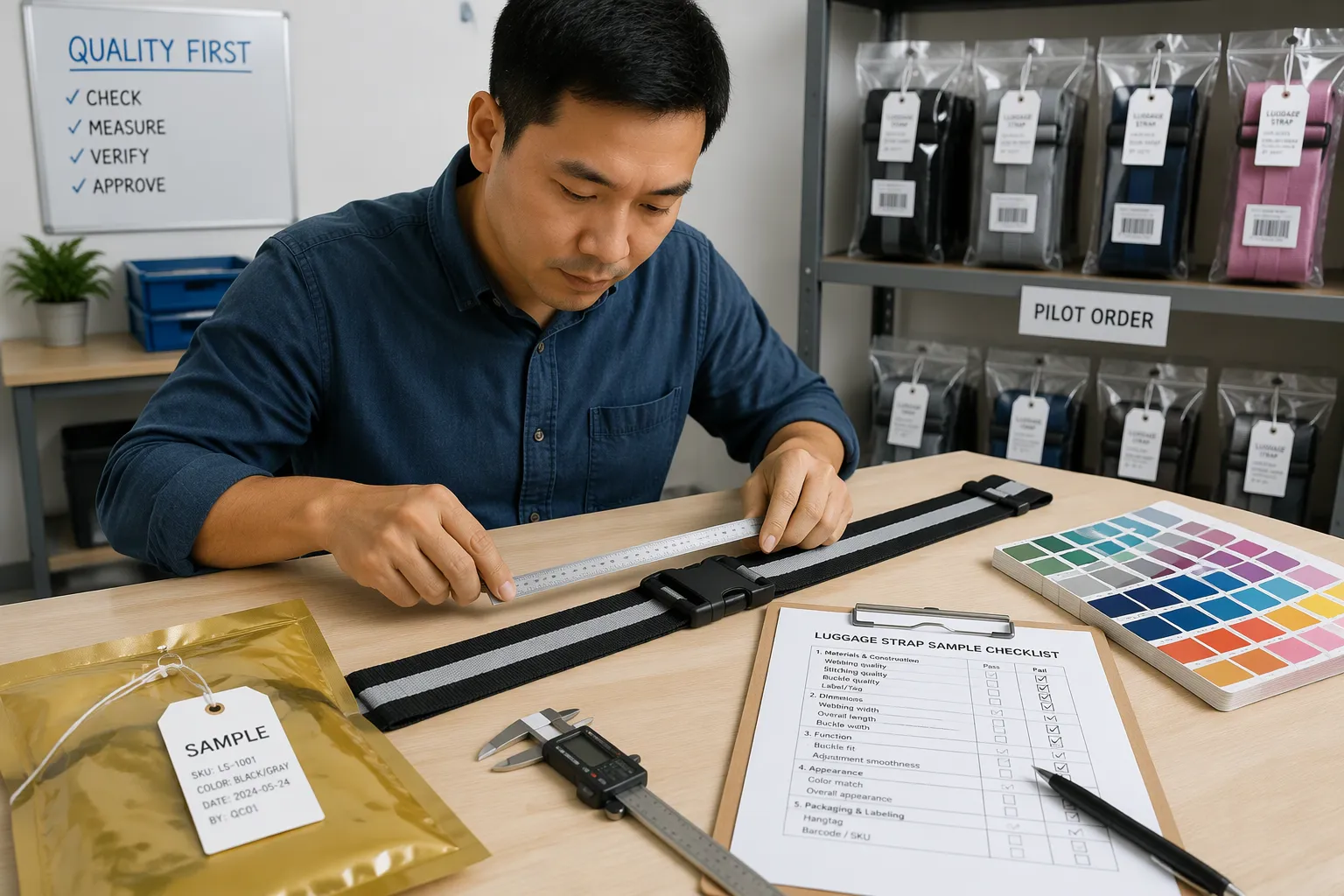
A sample shows whether the factory can meet your written spec. Omaska's bag sample approval checklist gives you a clear plan to follow. Make sure the sample uses bulk materials, not a sample-room prototype. Measure every outside dimension against your tech pack. Check webbing width, color, and weave, and confirm the same webbing will be used in bulk. Look at buckles for sharp edges and a proper fit. Verify thread type and bar tack reinforcement at webbing junctions and adjustment points. Run a loaded lift test with your own set weight, and listen for popping threads. Compare the color against physical lab dips in daylight, never against phone photos. Check the packaging, hangtag, polybag warning, barcode, and carton mark. Write down every revision in a tracking log, then sign, date, tag, and photograph the golden sample. Add a PO line that references the sealed golden sample before you release the order.
Use this checklist as your sample approval gate:
Check | What to Confirm |
|---|---|
Webbing | Width, color, weave, no fraying at cut ends |
Buckles | Size, finish, no sharp edges, metal grade |
Stitching | Bar tacks at high-stress points, no seam separation |
Length | Measured against tolerance in your spec |
Packaging | Hangtag, barcode, carton mark, inner protection |
Follow sample approval with a small pilot order. A pilot run brings out bulk color drift, length variance, and packaging errors that a single sample hides. For custom stackable luggage sets, test the connection system under load during the pilot. Confirm the connection method holds through turns and uneven surfaces. Treat every stackable luggage set order as its own validation project, because set-level checks differ from single-strap checks.
A weighted scorecard makes your recommendation easy to defend. Bonitabags suggests six areas: product-category fit at 20%, quality system at 20%, sampling and development at 15%, compliance support at 15%, capacity and delivery at 15%, and communication at 10%. Derflex adds commercial value at 15% and application fit at 20%. Pick six to eight criteria, set weights that reflect your priorities, and score every candidate on the same 1–5 or 1–10 scale. Multiply each score by its weight, then add the results. Keep must-meet gates visible, because a high total cannot make up for a failed requirement.
Criterion | Weight | What to Verify |
|---|---|---|
Application and technical fit | 20% | Material, service life, handling |
Quality consistency | 20% | Tolerances, sample-to-bulk alignment |
Customization and engineering | 15% | Drawing review, packaging mock-up |
Commercial value | 15% | Unit cost, MOQ, tooling, freight |
Lead time and capacity | 15% | Sampling and production schedule |
Compliance and documentation | 10% | Current test reports, labeling |
Communication | 5% | Response quality, escalation route |
E-ventus notes that a score built from shared order history and fixed rules "removes the argument." Score only criteria backed by evidence you can compare, and mark gaps as unknown rather than neutral. Normalize quotes for materials, MOQ, freight, and packaging scope before you compare price. Then recommend an OEM supplier on the numbers, not on impressions. When you recommend an OEM supplier, attach the scorecard, the golden sample photos, and the pilot results. Stakeholders can then see why you recommend an OEM supplier and where each rival fell short.
Your recommendation rests on five steps in a fixed order. You start with a written spec that fixes every detail. Next comes the capability check, then the compliance review, then the cost comparison. The scored recommendation closes the loop. Follow the order, and nothing slips through.
End with a practical rule. Recommend an oem supplier only after samples and a pilot order confirm color, length, and packaging performance on real luggage. A pilot run exposes bulk drift that a single sample hides. Use the scorecard to present your findings. Stakeholders see the weights, the evidence, and the gaps. Your recommendation holds up in any review, and the luggage program starts on solid ground.
Approve a physical lab dip on the actual webbing in daylight. Set a written tolerance, like a difference of 1.5 or less for multi-batch orders. Get all rolls from one dye batch and compare incoming rolls under standard lighting.
Write the exact length and an acceptable tolerance in your requirements. Measure every sample against that number. A 79-inch TSA-friendly strap and 2-inch heavy-duty polyester webbing are common requests, so check both figures before you approve the sample.
A pilot run brings out bulk color drift, length variance, and packaging errors that one sample hides. Test the connection system under load for stackable luggage sets. Make sure the connection method holds through turns and uneven surfaces before you start full production.
Flexible low moq support often runs 100–500 pcs, depending on product type and customization. Plan your moq around style and color counts, not total units. Each color split raises the effective moq per SKU, so confirm the number in writing.
Ask for current ISO 9001, ISO 14001, BSCI, CE, GS, UL, TUV, and RoHS certificates. Ask for lab and third-party test reports, plus product specification datasheets. Check report dates against your planned production dates, and make sure the 16 global export compliance certifications cover your destination market.
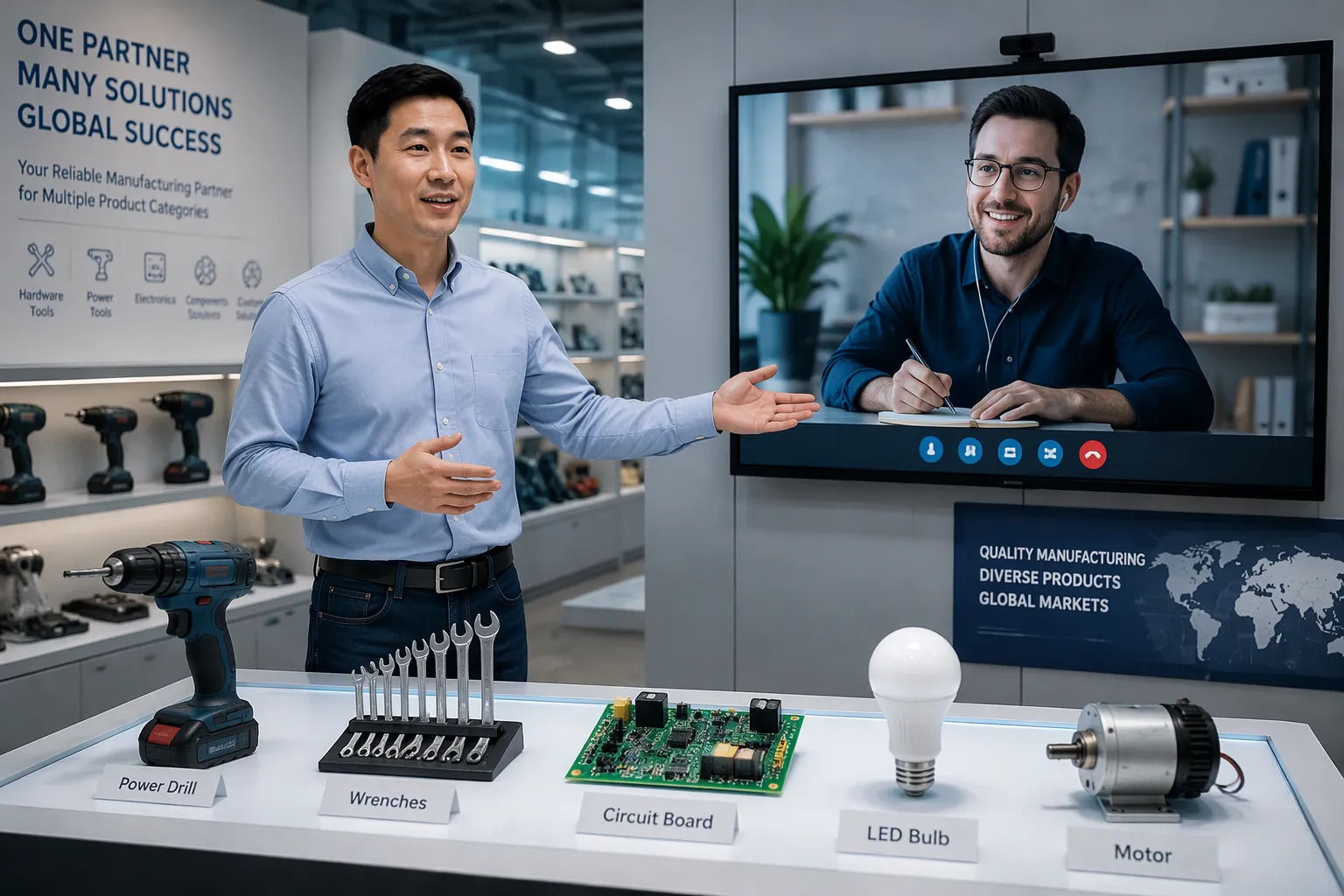
Yes, a Chinese manufacturer can handle multiple hardware product categories if it has in-house processes, compliance, and cost efficiency. Verify with audits and samples.
Find out more about our news >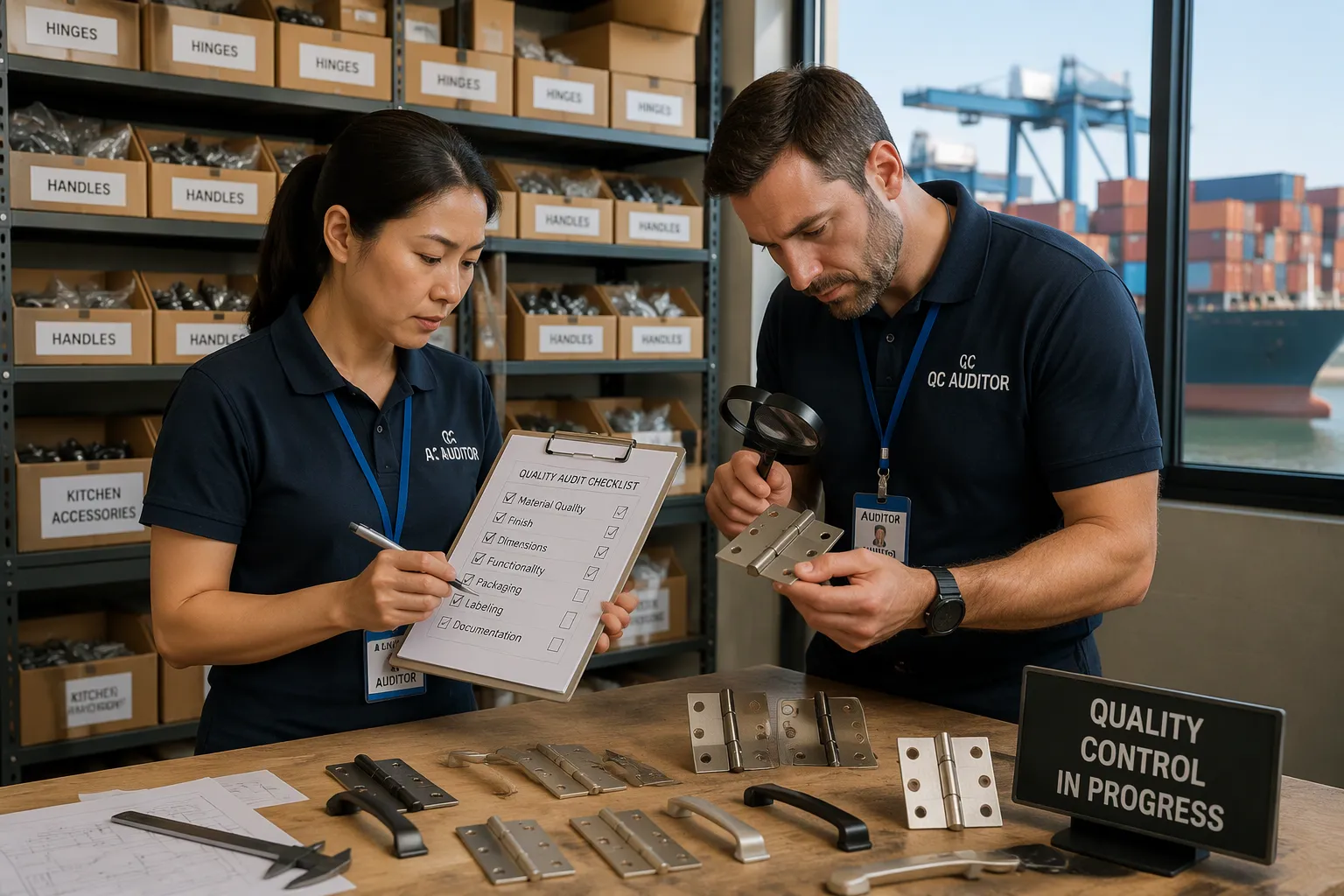
Verify the BSCI-audited factory's report and grade, then assess technical performance, application fit, compliance, and cost to secure your supply chain.
Find out more about our news >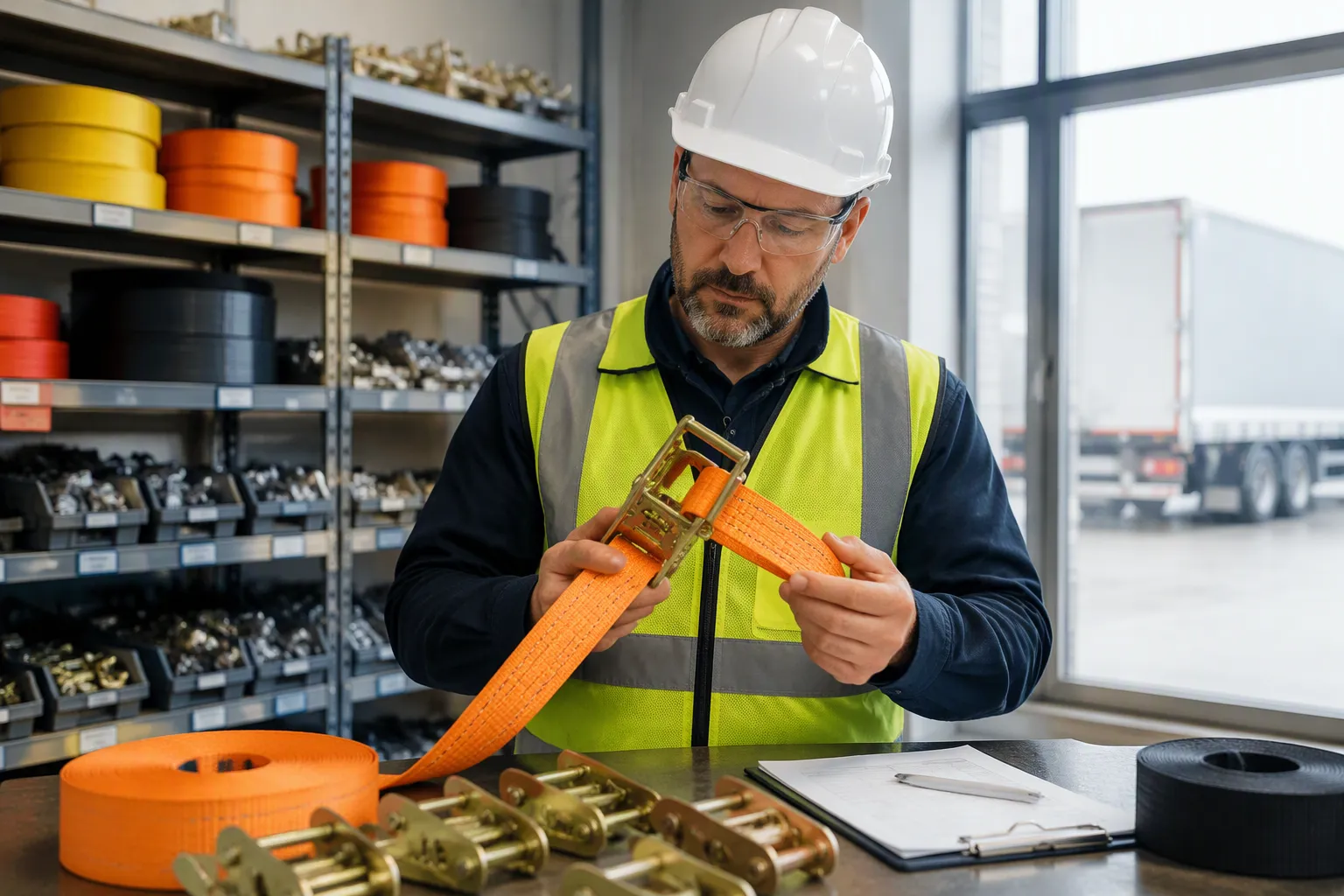
What should I look for in a Chinese factory? Check certifications, material specs, process control, testing, communication, cost, and application fit.
Find out more about our news >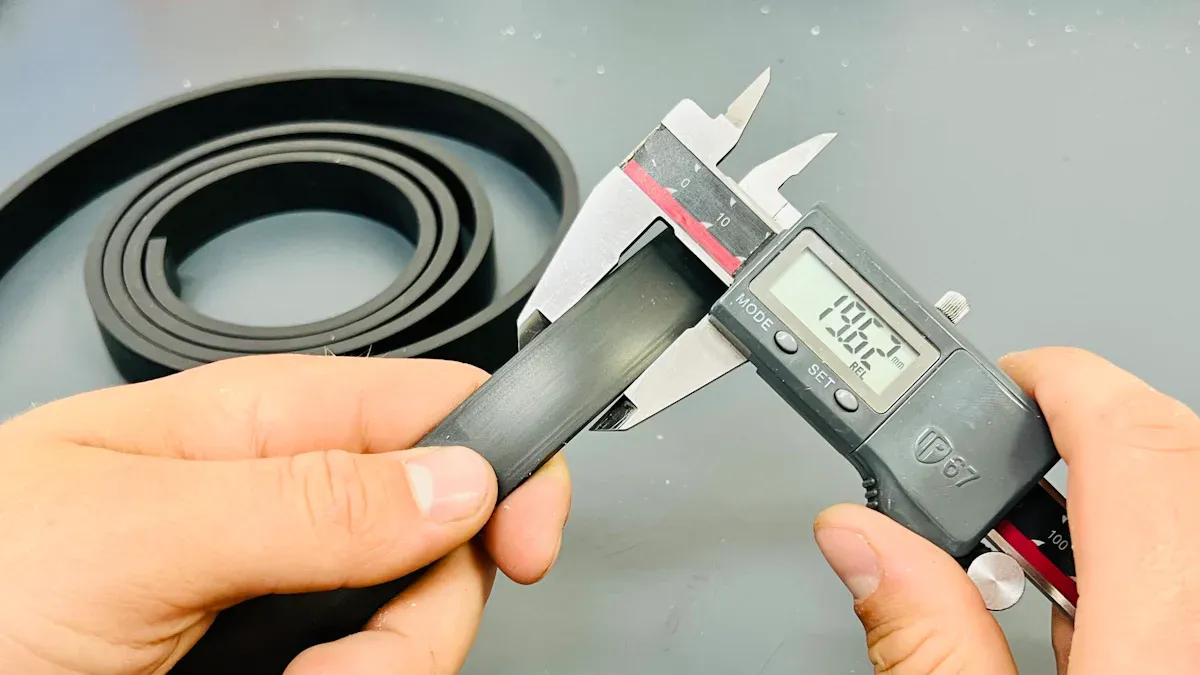
Use these 10 tips to verify a reliable Chinese supplier of EPDM rubber products. Check certifications, test samples, and confirm quality before you order.
Find out more about our news >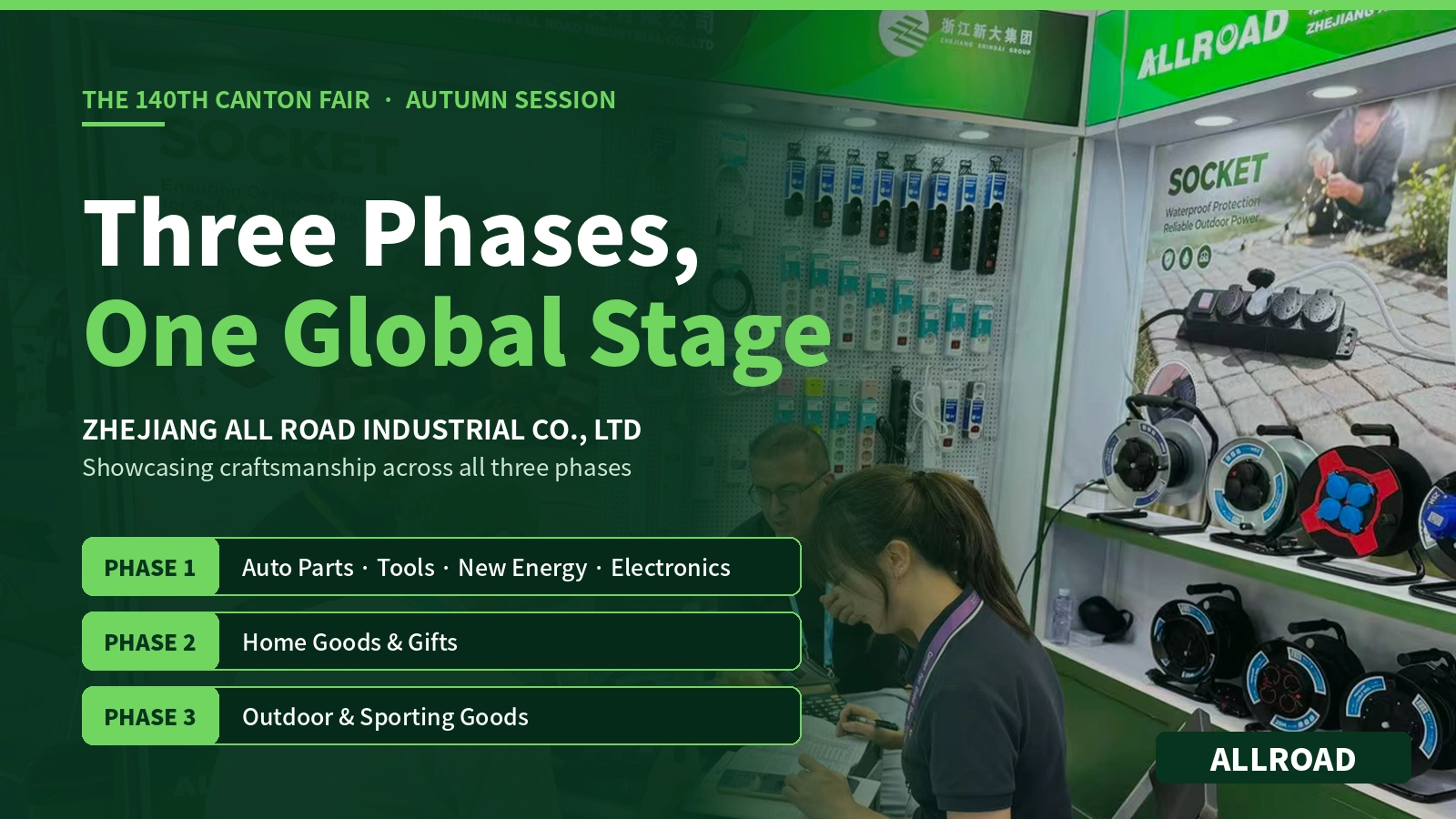
Zhejiang All Road Industrial Co., Ltd. Showcases Craftsmanship at the 140th Canton Fair (Autumn Session) and Engages Buyers from Around the World
Find out more about our news >
Verify before purchasing EPDM rubber accessories: check factory credentials, compound quality, traceability, compliance, and payment terms.
Find out more about our news >