
 EN
 English
 Vietnamese
 繁体中文
 Italian
 Spanish
 Thai
 Japanese
 Portuguese
 Korean
 Russian
 French
 German
 Arabic
Stay Updated with Allroad’s
Industry Knowledge
Industry Trends, Product Knowledge & Global Trade Insights

Industry Trends, Product Knowledge & Global Trade Insights
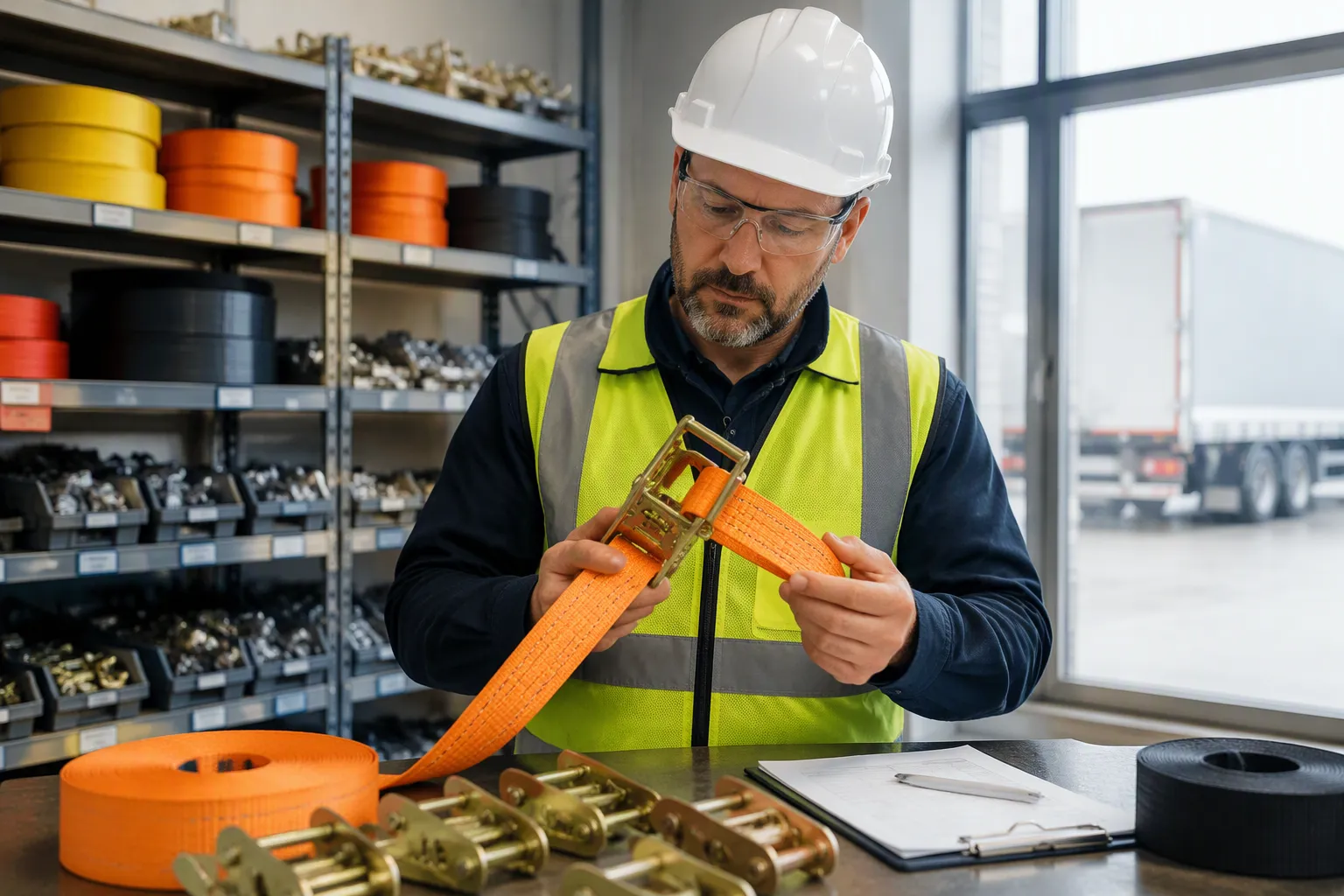
What should you look for in a Chinese factory that makes ratchet straps for your truck or trailer? When you ask what should I look for in a Chinese factory, focus on seven things: certifications, material specs, process control, testing, communication, cost, and application fit. A strap that fails can drop cargo onto a highway. That risk means real safety and liability problems for you and your business. Treat each factor as a real check. This post turns every factor into a question you can ask and a document you can check during factory vetting. Bring the list to your next supplier talk.
Check every certificate with the group that issued it. Do not accept papers that are out of date or do not match.
Make sure the strap specs fit what your trailer needs. Get the width, working load limit, and end fittings confirmed in writing.
Check how the product is made. Ask for in-line inspection records and final QC reports for your order.
Ask for third-party test reports for your exact model. Check the report date, the sample ID, and the lab that issued it.
Order a sample before you place a large order. Test the ratchet and compare it to your spec sheet.
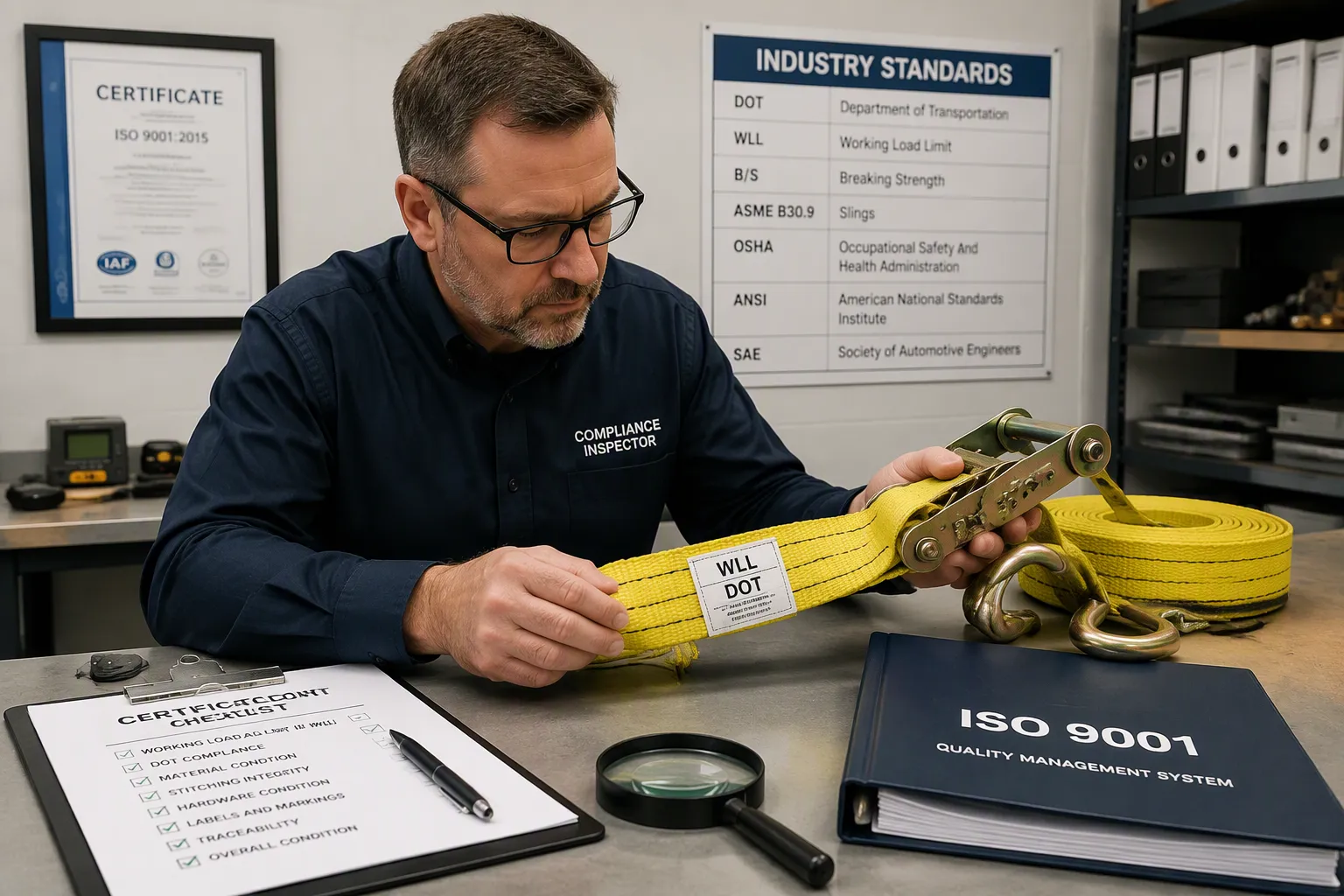
Start with the basic management-system certificate. Ask for ISO 9001:2015 first. It shows a documented quality system, but it does not prove product safety. Add ISO 14001:2004 for environmental management and BSCI for social compliance audits. Then move to product certificates. European buyers need CE for market access, GS for tested commercial product safety, and RoHS for restricted substances. U.S. buyers need UL where electrical parts apply, plus DOT markings under FMCSA 49 CFR 393, which requires a minimum 3:1 safety factor. Cargo securement also calls for EN 12195-2 test reports, which carry the Lashing Capacity rating, and ASTM D-3950 as the manufacturing standard. WSTDA membership shows familiarity with North American tie-down practice.
Certification / Standard | Region / Purpose |
|---|---|
ISO 9001:2015 | Quality management system (global baseline) |
ISO 14001:2004 | Environmental management |
BSCI | Social responsibility audit |
CE | European market access |
GS | Tested product safety (commercial use) |
UL | Electrical parts safety |
RoHS | Limits on hazardous substances |
EN 12195-2 | European lashing/cargo securement standard (Lashing Capacity rating) |
WSTDA | North American voluntary tie-down standards / industry membership |
DOT / FMCSA 49 CFR 393 | U.S. commercial transportation compliance (min. 3:1 safety factor) |
ASTM D-3950 | Ratchet strap manufacturing standard |
TÜV | Independent third-party strength/safety validation |
For U.S. operators, check the strap itself. Look for permanent Working Load Limit markings sewn or molded into the assembly. Confirm clear DOT markings and manufacturer identification on the product and label. Treat removable tags, unclear markings, or missing WLL data as signs of a non-compliant strap. A compliant label states the applicable standard, the LC or WLL, the webbing material, and the manufacturer. Legibility and permanence matter more than label color.
Here is what verifiable documentation looks like. ALL ROAD publishes ISO9001, ISO14001, BSCI, CE, GS, UL, TUV/GS, and RoHS certificates. Use that as a benchmark for completeness, not as a recommendation.
A certificate copy is only a claim until you check it. Verify each certificate number directly with the issuing body. Reject expired documents and mismatched models. Compare the quotation code, technical drawing, certificate schedule, and rating label. All four must name the same product.
Treat CE as a declaration, not a third-party certificate. Ask whether the factory identified applicable legislation, assembled technical documentation, and issued a valid EU Declaration of Conformity. For GS, request the current certificate and test-report identifiers. For UL, turn "UL available" into a listing or file number for your exact model. For RoHS, require restricted-substance documentation tied to the product family, not a generic corporate statement. For DOT, require product-specific documentation and match the model across report, certificate, and label.
Ask which edition the product is certified to and require a report from a recognized lab such as UL, TUV, SGS, or Intertek. An answer without an edition number is a red flag. Request the component-level certification list. Critical components should each carry their own certificate. Vague, delayed, or undocumented answers tell you what should I look for in a Chinese factory really means: paperwork you can trace, not paperwork you can file.
Match the new strap to the one already on your trailer. Start with width. Flatbed work calls for 3 in or 4 in polyester winch straps. Enclosed trailer loads usually take 1 in or 2 in webbing. Check the lacing capacity (LC) and the working load limit (WLL) on your current label. Winch straps for flatbed trucks and trailers commonly rate at 15,000 lbs ultimate breaking strength and 5,000 lbs WLL. Standard assembly lengths run 27 ft or 30 ft. Confirm the end fittings match your anchor points. Confirm the label data matches the quote.
Polyester webbing is the primary material for flatbed and enclosed trailer use. It resists stretch under load and holds its rating in wet conditions. Ask the factory to confirm the webbing fiber and the rated capacity in writing.
Strap Model | Width | WLL | Length |
|---|---|---|---|
4 in | 5,400 lbs | 30 ft | |
Flat Hook Ratchet Strap | 2 in | 3,335 lbs | 30 ft |
Inspect the ratchet buckle and end fittings before you approve a run. Common defects include:
Buckle deformation after repeated tightening
Poor handle design that pinches fingers
Weak corrosion protection
Skipped threads and low stitch density
Silent material swaps between orders
Run a functional test on every sample. The ratcheting mechanism should operate smoothly. Tightening and releasing should work without malfunction. Look for cracks, pits, corrosion, or distortion on ratchets, buckles, and hooks. Check contact points for unusual wear. Flat hooks are the most standard end fitting on winch straps, and they distribute tension from the load well.
Ask the factory to explain every step from raw webbing to packed carton. A good line follows a clear order:
Webbing inspection and roll traceability
Cutting and heat-sealing of ends
Stitching of the assembly and label
Buckle and end-fitting attachment
In-line pull checks
Final inspection and packing
At each step, ask what the operator checks and what happens to a failed unit. Good factories keep rejects apart from good stock and write down the reason. Ask for the in-line inspection record from a recent production run. Look for signed entries, timestamps, and measured values, not just checkmarks.
Then cover final QC. Ask about sampling plans, the acceptance criteria, and who signs off before shipment. Request the final inspection report for your order. Confirm the report lists the model, the batch, the WLL, and the label text. A factory that cannot show you these records is telling you something useful.
Some Chinese factories supply only the ratchet components. The webbing and the assembly may happen at another plant. Ask directly where each part of the strap is made: the webbing, the buckle, the hooks, and the stitching. Get the answer in writing on the quotation.
Then verify it. Request the supplier list for webbing and hardware, and ask whether the factory audits those suppliers. Check that the webbing mill and the assembly line both appear in the quality documentation. If the factory sources webbing elsewhere, ask for that mill's test reports and confirm the batch numbers match your order. Traceability across plants is the difference between a documented strap and an assembled guess.
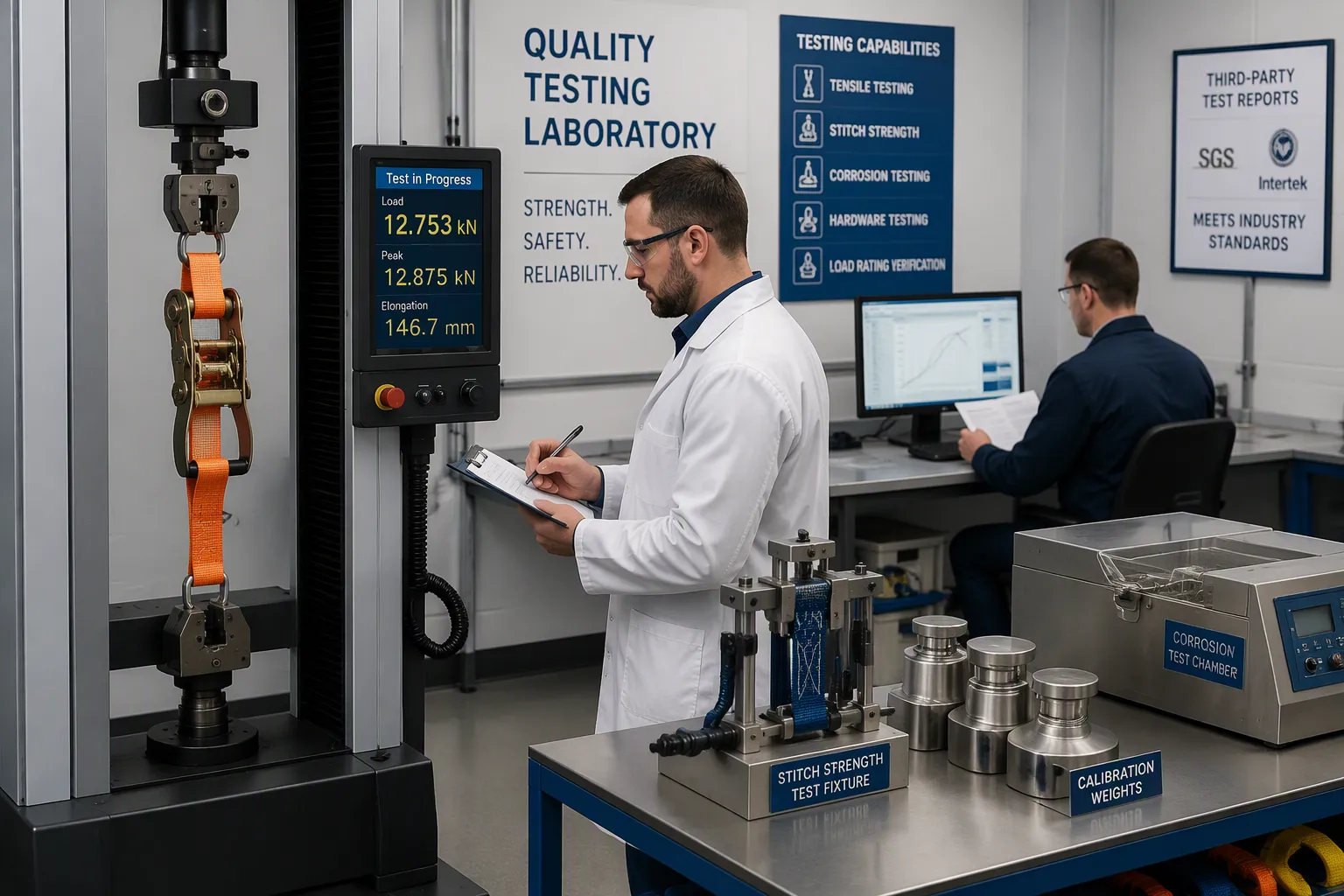
A factory that tests its own straps knows its limits before you do. Ask what the in-house lab can measure. At minimum, it should run breaking-strength tests on complete assemblies and tensile tests on webbing. It should also check stitch strength, buckle function under load, and corrosion resistance on hardware. Ask how the lab calibrates its equipment and how often. Ask who runs the tests and whether that person reports to production or to quality. A lab that answers to quality gives you an independent check on the line.
An established lab signals real capability. A lab that has operated since 2017, as ALL ROAD's has, has had years to build fixtures, train operators, and accumulate baseline data. That history matters. A new lab may own the same machine but lack the reference data to interpret results. Ask for the lab's start date and for a sample test record from a recent production batch. Look for measured values, not just pass or fail stamps. Ask whether the lab keeps retention samples. Retention samples let you re-test a batch later if a customer reports a problem.
Ask which standard the lab tests to. A serious lab will name EN 12195-2 or ASTM D-3950 and show you the test setup. Ask how it records the failure point. A strap that breaks at the stitch tells a different story than one that breaks in the webbing. The lab should log both the load and the failure location. That detail separates a real test from a marketing claim.
In-house results are useful, but outside reports carry more weight. Request third-party reports for the exact model you plan to order. Check three things on every report: the issue date, the sample ID, and the issuing lab. An expired report tells you nothing about current production. A sample ID that does not match your model or batch breaks the chain of evidence. A report from an unrecognized lab is hard to defend if a claim ever arises.
A factory with a large report library is easier to verify. ALL ROAD publishes 216 lab and third-party test reports, for example. That volume lets you find a report close to your model instead of accepting a generic one. Ask the factory to send the report index first, then request the specific reports that match your strap width, LC, and end fittings. Compare the report's rated capacity to the label and the quotation. All three should agree.
Check the report scope. Some reports cover webbing only. Others cover the full assembly with hardware. You need the full-assembly report for a cargo securement claim. Ask for both if the factory has them, and read the sample description closely. A report that lists only the webbing leaves the hardware untested.
Finally, ask how the factory handles a failed test. A good answer describes quarantine, root-cause analysis, and a corrective action record. A vague answer tells you the lab exists for show. Ask for a sample corrective action report from the past year. Bring these questions to your sample order. The answers will tell you more than any brochure.
You can tell a lot by how fast a factory answers your first email. A dependable Chinese ratchet strap maker usually replies within one work day. A good answer covers every point in your spec sheet with clear numbers: breaking force, lashing capacity, tension force, and safety factor. Replies that are vague or slow are a warning sign of bigger problems. Suppliers who can't answer basic product questions quickly will likely miss deadlines and make quality mistakes.
Test English skills and technical knowledge at the same time. Ask a question that uses terms like working load limit and breaking strength, then check whether the answer uses them correctly. A factory that offers a video call with its engineering team lets you tour the production floor live. That call shows you more than any brochure.
"The customer service representative explained very detailed, service attitude is very good, reply is very timely and comprehensive, a happy communication!"
What to Expect
Primary written tool
Email for detailed technical questions
Response expectation
Reply within one business day
Real-time tool
Video call with the engineering team
Language capability
English proficiency plus technical knowledge
Fast replies alone don't prove a factory is good. Nice-looking samples have failed because of uneven stitching during production. Check their promises with a small trial order. A reliable partner welcomes clear questions and reports problems without hiding behind vague assurances.
Order a sample before you commit to a large order. Ask for the sample lead time and the production lead time in writing, and confirm both on the quotation. Compare the sample against the spec sheet: width, lacing capacity, breaking strength, end fittings, and label text. Test the ratchet mechanism yourself to see how it works.
Then ask how the factory handles a schedule slip. A strong supplier gives you a new date and a reason. A weak one goes quiet. Long-term buyers value steady support whenever problems come up. That steady support is what separates real factories from simple order-takers.
A ratchet strap quote should look like a spec sheet, not just a price. Ask for the unit price broken down by part: webbing, buckle, end fittings, stitching, labeling, and packing. One lump sum hides where the factory cut costs. Compare the quoted breaking strength and working load limit to the price. A 4 in flat hook strap rated at 5,400 lbs WLL and a 2 in strap rated at 3,335 lbs WLL use different amounts of material, so their prices should be different too.
Quote Line | What to Confirm |
|---|---|
Unit price | Broken out by component |
Tooling and setup | One-time or per-order |
Sample charge | Refundable against volume |
Freight terms | Named Incoterm and port |
Payment terms | Deposit and balance schedule |
Confirm the Incoterm by name, like FOB or CIF, and the named port. Ask if the price covers labeling, poly bagging, and carton marking. Get the quote validity period in writing. A quote that expires fast protects the factory from material price changes, and you should know that before you plan your budget.
The cheapest quote often comes with the highest total cost. Judge the strap by its test data, not by what competitors charge.
Watch for spec drift between the quote and the sample. A factory may quote 4 in polyester webbing and then ship a lighter weave. Ask for the webbing weight and fiber in writing on the quotation. Then check both on the sample.
Tooling and label plates add one-time charges. Ask if the factory spreads them out or bills them upfront. Confirm who owns the logo plate after the order ends. Freight surprises hurt too. Ask for the carton dimensions and total shipment weight early, because volumetric weight can push your landed cost well above the unit price. Finally, price the reorder. A steady price across repeat orders shows a factory that controls its own supply chain.
Pick the design based on how often you tie down loads. A retractable ratchet strap keeps the webbing rolled on a spring-loaded reel. You pull the strap out, hook it, and tighten it. The reel takes up slack when you let go. This design works well for heavy daily use: delivery routes, enclosed trailers, and utility trailers where the driver secures cargo many times a day. The reel keeps the webbing safe from UV light and road dirt between uses, and it keeps the strap stored neatly.
A non-retractable strap is the simpler tool. You handle the loose webbing yourself and roll it up by hand after use. Choose this design for flatbed winch straps, heavy loads, and loads you secure less often. The 4 in flat hook winch strap rated at 5,400 lbs WLL belongs in this group. It gives more bearing surface on the load and makes it easier to inspect the full webbing length. Ask the factory which design it builds in-house. A factory that molds its own reels controls the spring tension and the housing fit.
Chinese factories often offer custom sizes and private logo options. Confirm the exact options in writing before you order. A typical customization menu looks like this:
Customization Category | Available Options |
|---|---|
Strap width | 25mm, 35mm, 50mm, 75mm |
Length | Customized to order |
Color | Custom Pantone color matching |
Hook types | S hook, J hook, Flat hook, Snap hook (also wire hook) |
Branding | Logo printing and private labeling |
Breaking strength | Customizable (up to 10,000kg+) |
Webbing material | 100% high tenacity polyester |
Ratchet buckle finish | Zinc-plated / anti-corrosion coating |
Ask for your logo plate and label artwork in a pre-production sample. Check the stitch density around the label and confirm the WLL text matches your quote. ALL ROAD shows how a factory can be set up for U.S. buyers. It runs OEM/ODM services through an in-house lab started in 2017, and it opened a North American subsidiary in 2022. That local presence shortens the path between your spec sheet and the production line.
You now have a checklist you can use. Check certifications and DOT markings against the issuer's databases. Confirm width, lacing capacity, breaking strength, and end fittings in writing. Then check the label against EN 12195-2 or WSTDA. Audit process control, including where the factory makes the webbing, buckle, and hooks. Ask for real test data tied to your exact model.
Bring this list to your sample order and to every talk with a factory. Ask what should I look for in a Chinese factory, then let the documents give the answer. Ask for third-party reports and a sample run before you commit to a large order. A factory that welcomes these checks is the one worth your repeat business.
Ask for the certificate number and the issuing body. Then check that number in the issuer's public database. Confirm the certificate covers the product line you plan to order. An expired or mismatched certificate fails the check, no matter how good the scan looks.
FMCSA 49 CFR 393 sets a minimum 3:1 safety factor for cargo securement. That means the strap's breaking strength must reach at least three times its working load limit. Ask the factory to show both numbers on the label and in the test report.
Yes, many offer private labeling and logo printing. Request a pre-production sample with your artwork. Check the stitch density around the label and confirm the WLL text matches your quote. Get the logo plate ownership terms in writing before you pay tooling charges.
Ask for the sample lead time and the production lead time in writing, and confirm both on the quotation. Compare the sample against your spec sheet: width, lacing capacity, breaking strength, end fittings, and label. Test the ratchet yourself before you approve a run.
Request the full-assembly report for any cargo securement claim. A webbing-only report leaves the hardware untested. Ask for both if the factory has them. Check the report date, the sample ID, and the issuing lab, and confirm the rated capacity matches your label and quote.
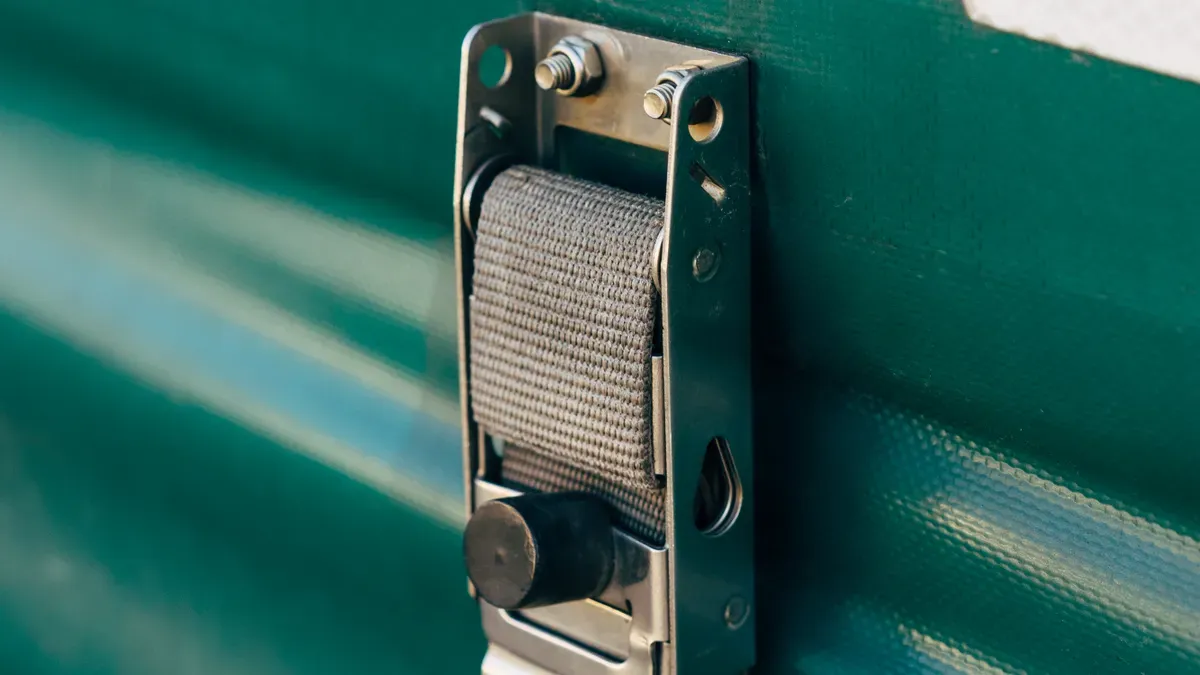
To recommend a Chinese factory for heavy duty cargo straps, check ISO certifications, third-party testing, and export experience. Verify compliance and support.
Find out more about our news >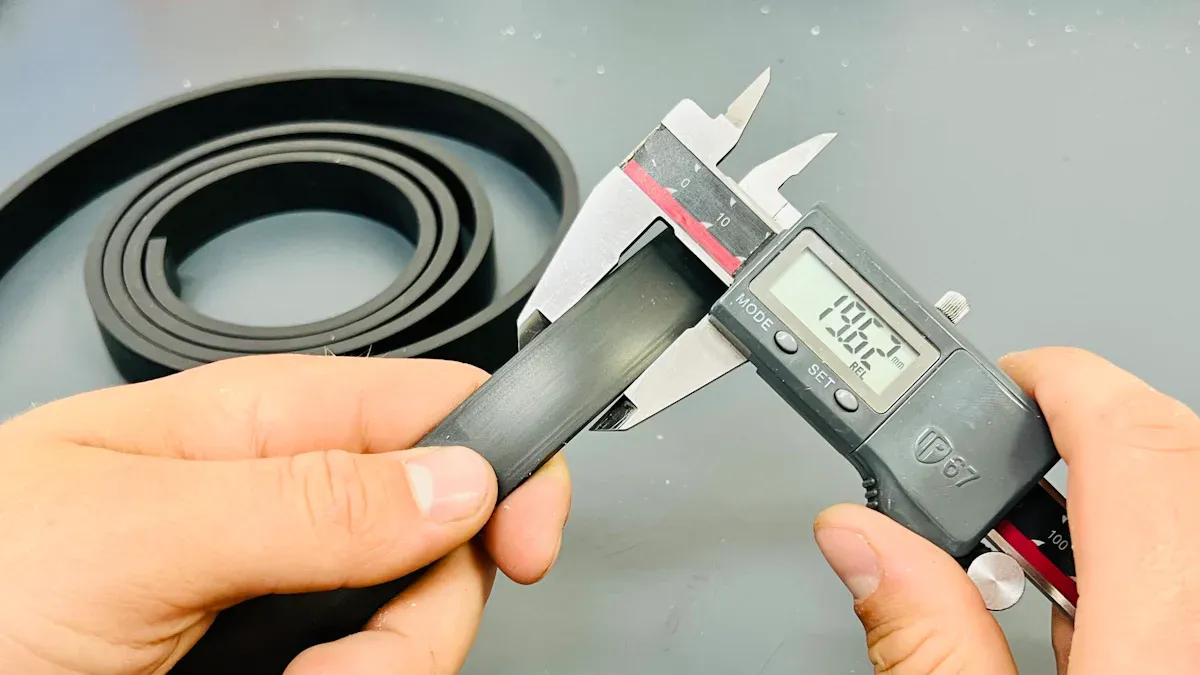
Use these 10 tips to verify a reliable Chinese supplier of EPDM rubber products. Check certifications, test samples, and confirm quality before you order.
Find out more about our news >
Ensure your import business thrives by checking these 5 critical factors in a dependable supplier of hardware tools, from quality to communication.
Find out more about our news >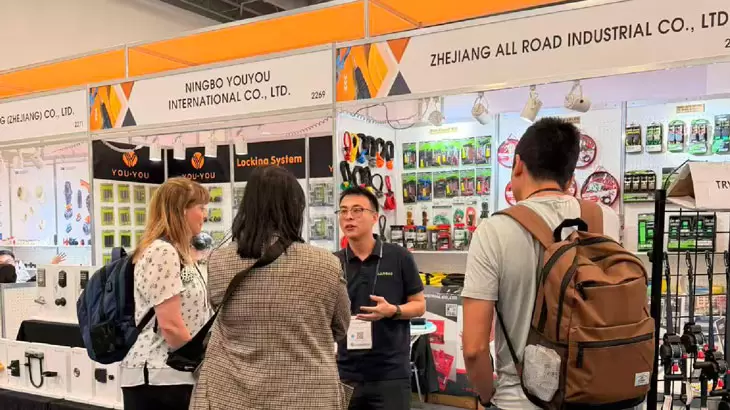
As morning light bathes the Las Vegas Convention Center, the annual flagship event for the global hardware and auto parts industry — the 2026 National Hardware Show (NHS, Concept to Commerce) — grandly kicked off from March 31 to April 2. ZHEJIANG ALL ROAD INDUSTRIAL and Trade Co., Ltd. (hereinafter referred to as “ZHEJIANG ALL ROAD”) showcased its core auto parts and hardware tool product lines,
Find out more about our news >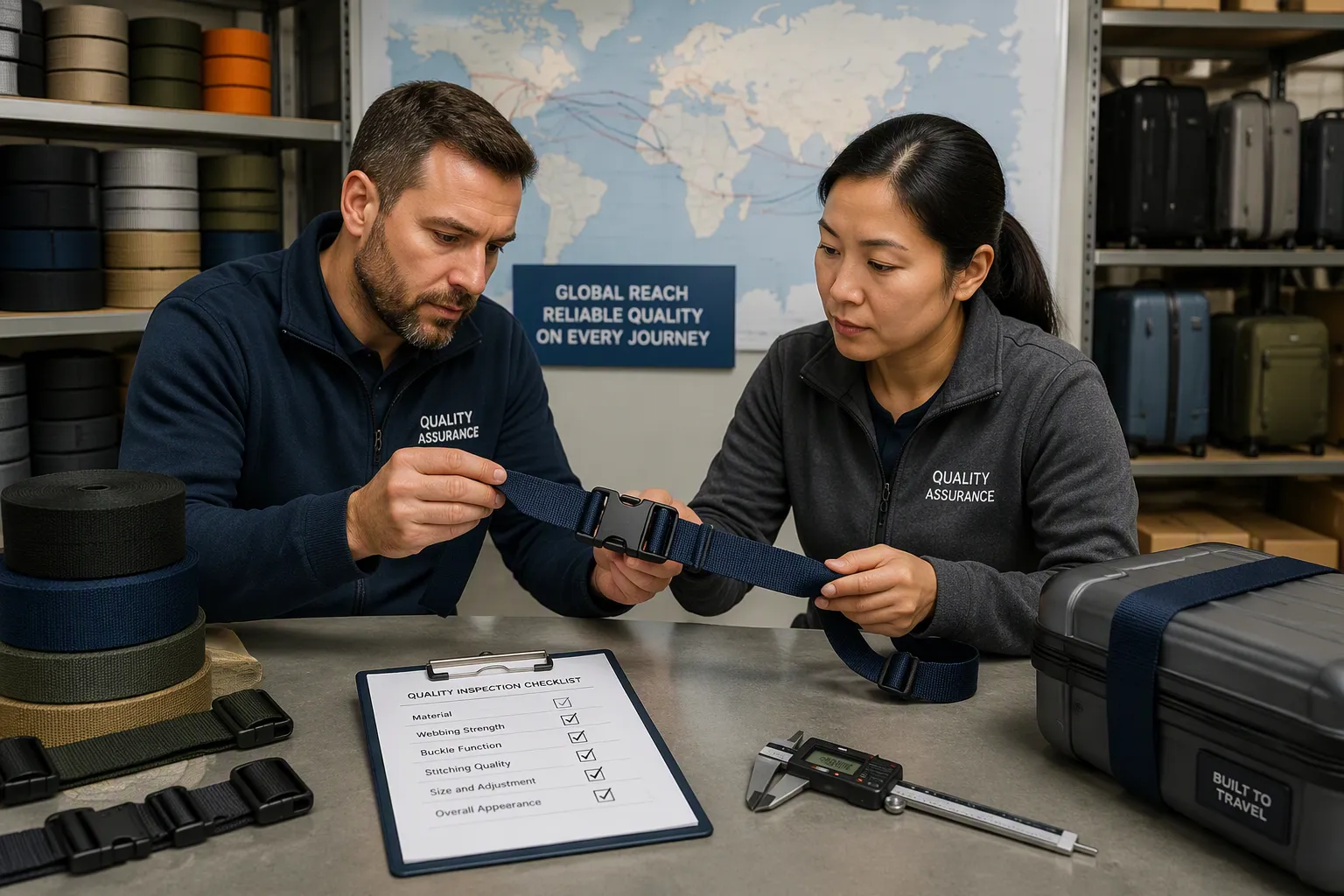
Choose a dependable luggage strap manufacturer by checking quality, compliance, and cost. Ensure your international travel accessories meet standards.
Find out more about our news >
Identify a reliable factory that manufactures tow ropes and cargo straps by defining specs, using targeted channels, auditing suppliers, comparing quotes, and trial orders.
Find out more about our news >